Showing posts with label hemiptera. Show all posts

Sunday, March 22, 2009

Critters currently destroying my belongings.

Hi, Critter Lovers!

I hope this post finds you all enjoying the first warm breezes of spring!
DSCN4582.JPG

Unfortunately, with warmer weather comes the renewal of horrifying insects:
DSCN4574.JPG
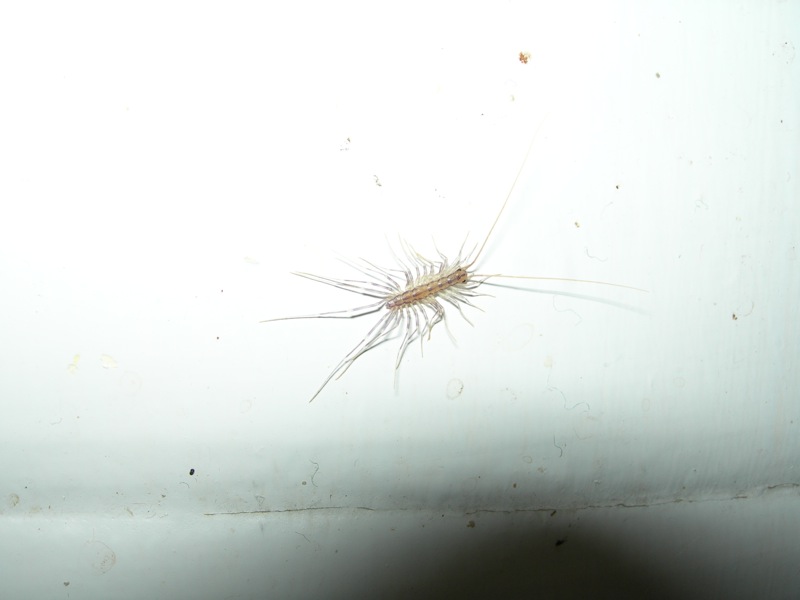
This 'pede was above my kitchen sink on Saturday morning. Thankfully it was only 1/4 inch long.

Before we discuss critter destruction, I'd like to show off our "new" couch!

DSCN4580.JPG

Stella did not mind the old couch, which was perched on duct-taped-together phone books, even if it was getting holey.

DSCN4569.JPG

The first incidence of critter warfare was a bug attack on two of my houseplants. But was a dual attack; two different plants, two different locations, and two different bugs!

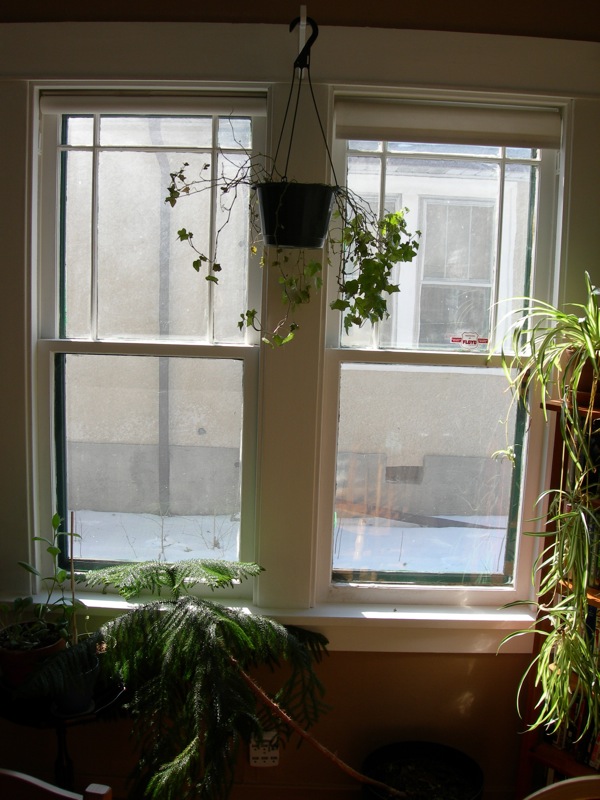
My dear Mama bought me a lovely ivy when she visited in November:
DSCN4521.JPG

Unfortunately the plant has been fading all winter. I should have taken action sooner, for I noticed tiny spider webs covering the plant.
DSCN4520.JPG

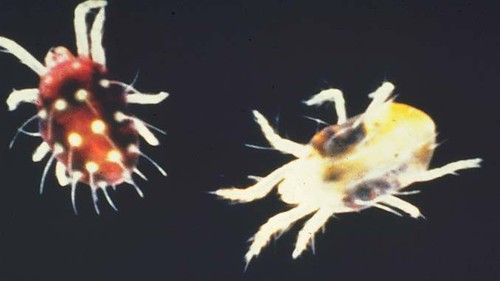
Upon further research, I've discovered the culprit: Two Spotted Spider mites, or Tetrahychus urticae. These tiny spiders have been sucking the chlorophyll out of the formerly lovely ivy, causing it to wither and drop leaves!
spidermitepeg.jpg
(Actual size, .05 mm)

The female spiders have been laying up to 20 eggs a day underneath the leaves. To remedy the situation, I've sprayed the plant with bug spray, but I think a more effective treatment would be to wash the plant with a special soap. The dry and warm climate of my house contributed to the spiders' success. Maybe I should try misting it, or I could just throw it away, as it could be spreading spider mites to other plants.

The next attacker struck my music studio. I'm so thankful to have windows for the first time, so I went ahead and bought some plants to decorate the space.

DSCN4542.JPG
(Note the cool fountain made by my Father-in-law and the thrift store painting!)

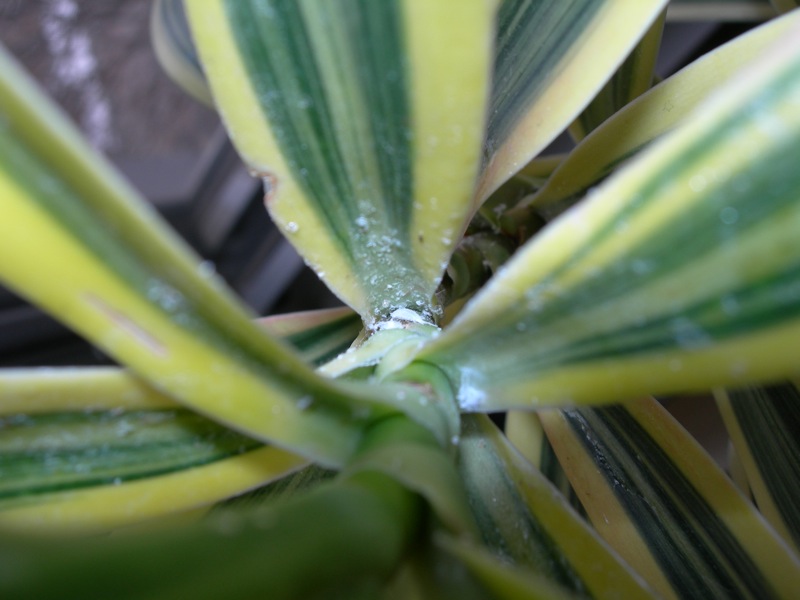
Why, what are these white fuzzy bugs on my plant?
DSCN4539.JPG

Could it be...a Mealy Bug? Pseudococcus longispinus is covered with a white, waxy coating that protects it from moisture loss. These guys love hiding in the nooks and crooks of plants, as well as in soil and pot crevices. Using a pointy mouthpart called a stylet, mealy bugs suck the moisture out of plants. Their toxic saliva harms the leaves, causing them to drop. Meanwhile, they excrete a sticky substance called "honeydew" which can encourage mold growth.

In the following photo you can see the mealy bug's long tails.
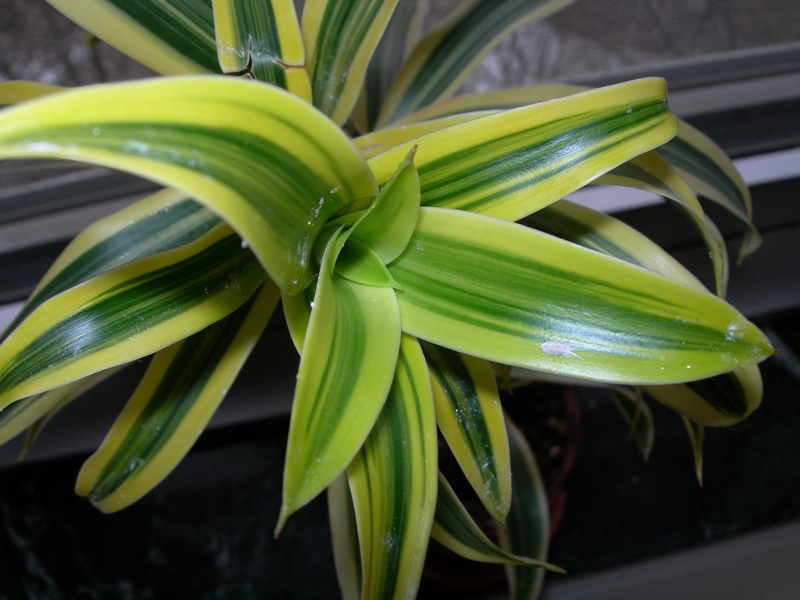
DSCN4546.JPG

Apparently the long tailed species gives birth to live young! Even better.

To control this infestation I've been manually removing the fuzzy bugs.

The final destruction of my property is on a much larger scale:

DSCN4524.JPG

Oh! Perhaps the gnawing sound I heard upstairs was only a squirrel, EATING OUR HOUSE!

squirrel

Thankfully, R fixed the fascia with some wire mesh and that foam stuff.
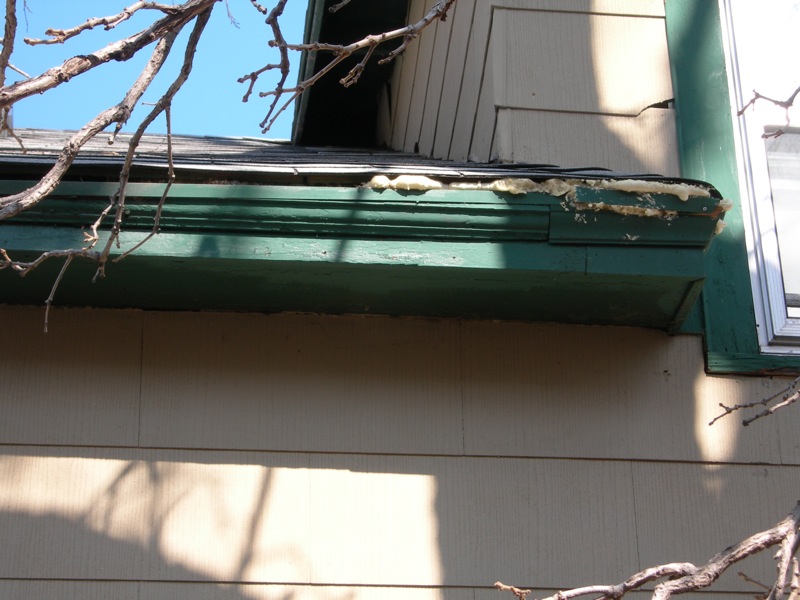
DSCN4553.JPG

The squirrels have further "trimmed" the foam since I took the photograph. I would think the squirrels would be thankful for all of the birdseed I've provided over the harsh, cold winter. Ungrateful bastards!

I'm looking forward to hearing of your Spring critter encounters!

love,
Wendell!

Wednesday, October 15, 2008

Bug Attack!

Hey, y'all!

Hope you're doing smoov mid-week! I am packing, exercising, thinking about packing and hanging out with people.

Beauty on the St. Olaf campus:
DSCN4060.JPG

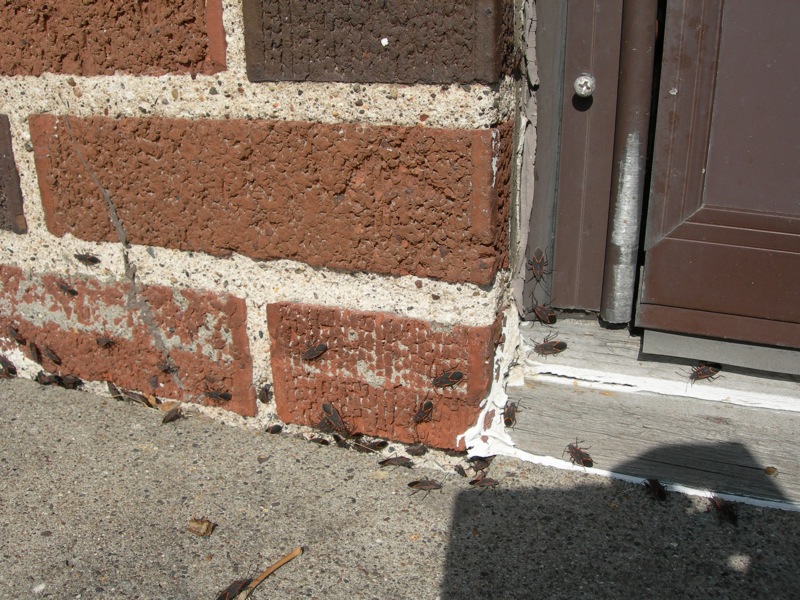
Once again the Box Elder Bugs are invading our apartment:
DSCN4062.JPG

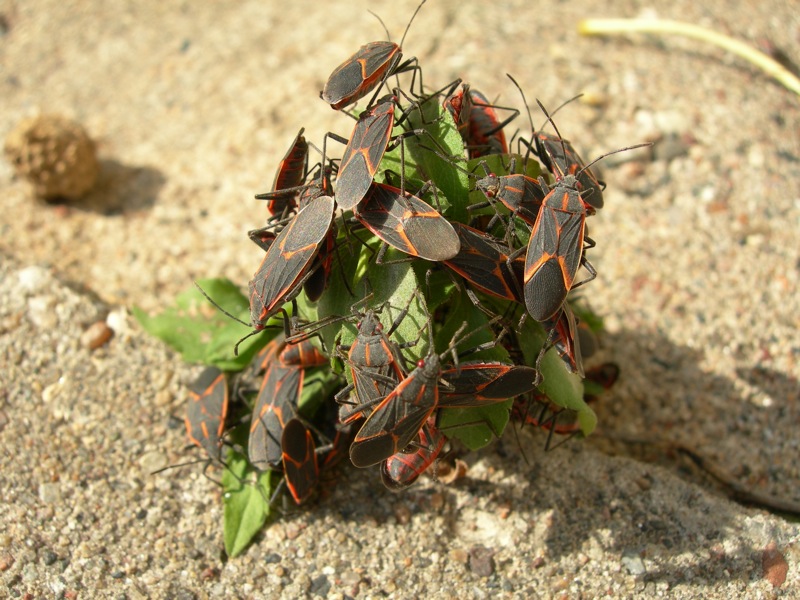
It's weird; before I went to the gym today there were several clusters of like, 100 bugs, and by the time I got back the clumps had dissipated.

A mini-gathering on this little plant:
DSCN4064.JPG

Meanwhile, R is on his way to the OC! Jerk. Last night he felt like a little coffee:
DSCN4065.JPG

I'm excited for the Project Runway finale tonight! Also I've heard Ryan Adams and the Cardinals new single "Fix It" TWICE on The Current. It's from their upcoming album Cardinology! EEEEEEEEeeeee! I'm going to see them open for Oasis at the Xcel Energy Center this December. Yes.

xoxoxo
Wendell

Monday, August 25, 2008

Bugs and Birthdays

Dear Critter-heads,

How are you? I admit my posts have not been wildlife related as of late. But! That is soon to change.

Here are the creatures I've encountered recently.

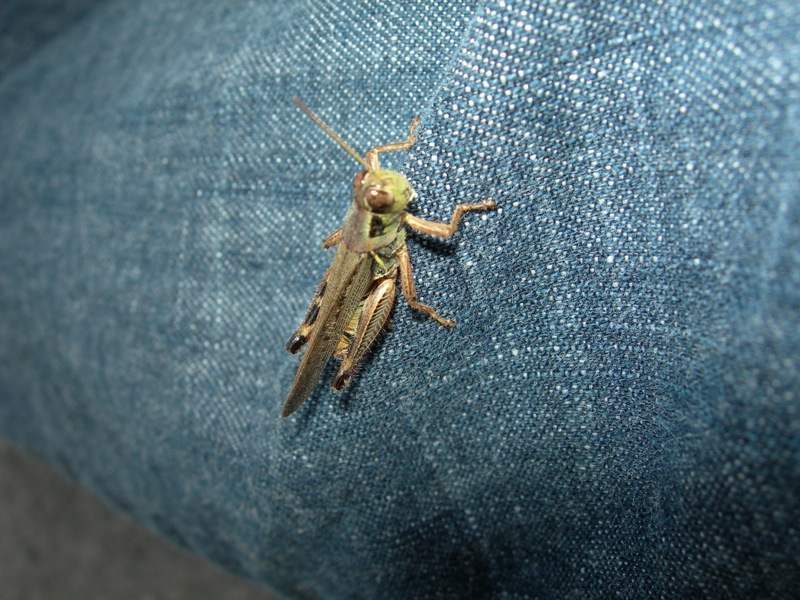
On my Saturday birthday party (shout outs to everyone who bowled and chillaxed!) a grasshopper awaited R and I at our table. He evacuated to my pants leg.
DSCN3890.JPG

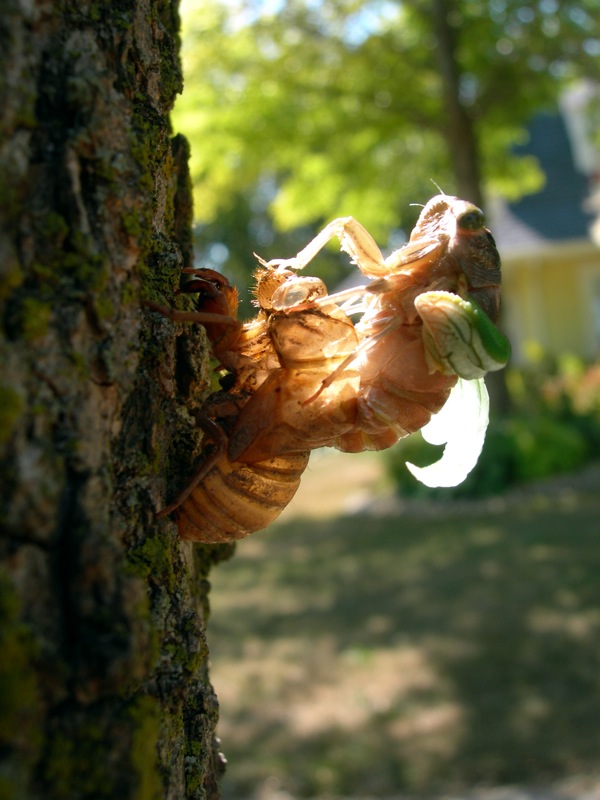
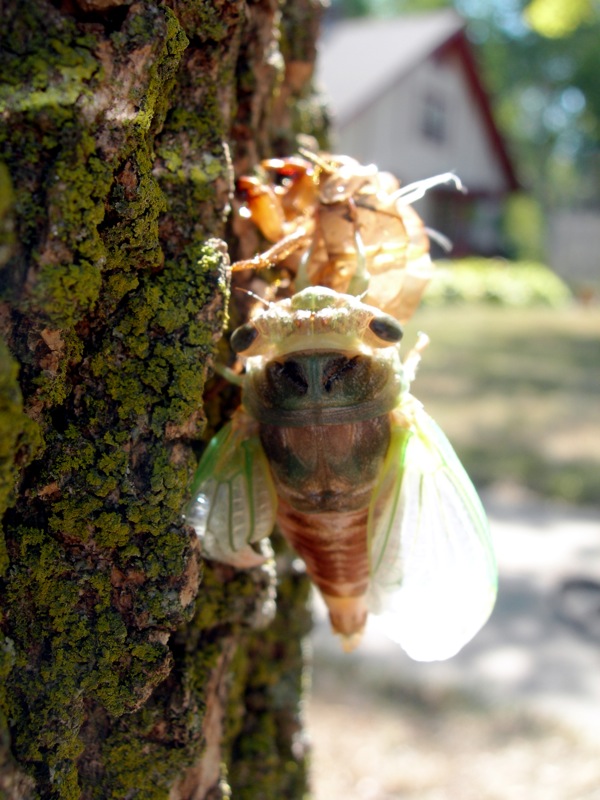
Sunday we ventured south to the B family homestead, where my Mom-in-law spotted these cicadas emerging from their old exo-skeletons!
DSCN3894.JPG

DSCN3895.JPG
I think cicadas have cute faces, with their wide-set eyes.

Here is my cicada entry from my old blog, dated 7/12/2007:
Dear Critter Lovers,

Hello! Happy Thursday to you all. The last few days in Minneapolis have been those 75 degree, puffy cloud-filled sky days, my favorite. Daydreaming weather.

I can even see the sky from my new cube at my new temp job! I've never had a cube before; it's very exciting.

Critter Newz:

More trouble in the Middle East: Badgers?!?

Another mammoth fossil!

You've got to be squidding! (Lame joke.)

Check out this cool horsey. Yet another pet R needs to purchase for me!

Wow, I have several critter ideas for this blog; a bird request from my cousin Miss Lippy, bats, and a mammalian menace that is taking over the world!

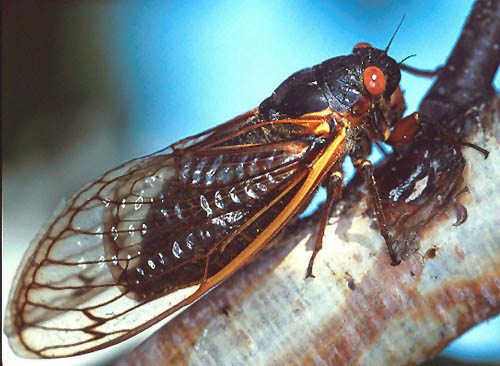
Today our focus is the request of CN, Puccini soprano and recent birthday-girl. When CN was visiting her motherland of Chicago, she was accosted by cicadas! I think she is referring to the emergence of Brood XIII, according to the University of Michigan Department of Zoology page.

cicada3

I think we saw one of these in St. Paul the other day. (Shout outs to the B family!)

Cicadas are members of Hemiptera, or the "true bug" order. They are present on every continent except Antarctica.

These bugs are famous for two things. First, they are the loudest insects in the world! Second, cicadas have dormant cycles of two to 17 years.

Male cicadas are the noise-makers (with females being the audience!) and obviously this music is love related. Unlike grasshoppers who rub their leg against their abdomen to create sound, cicadas have a pair little drum-like membranes, called tymbales, on their abdomen. They vibrate the tymbales, which resonate in special enlarged hollow chambers.

In addition to finding mates, cicada song can repel birds, and a special version of the song acts as a distress cry. Differences in cicada sounds are the most definitive way to identify individual cicada species.

Once the female is seduced by the male's song, he might sing a special courtship song to her. After mating, the female bites open slits in a nearby twig, into which she lays her eggs. Once they hatch, the nymphs drop to the ground, where their strong front legs bury them one to eight and a half feet. There they subsist on tree root juice.

After their dormant period, the nymphs emerge from underground, sometimes thousands in one night. They climb into trees and molt one last time there, emerging as snow white adults. After hiding in the trees and hardening up for a few days, the cicadas begin flying around, finding some plants to suck on, and searching for mates.

In the U.S., most cicadas are part of the Magicicada genus. These are cyclic in either 13 or 17 years. You'll note these are prime numbers, which is a strategy to avoid predators with three or five year tendencies from wiping them out. Primary enemies of the cicadas are insects too: the cicada killer wasp and the praying mantis.

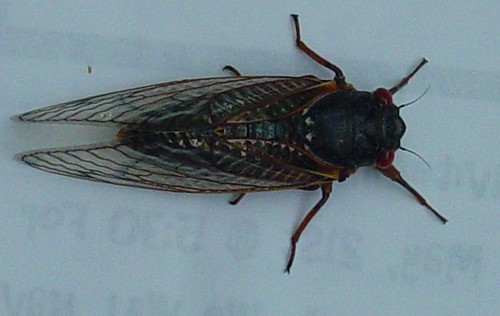
cicada-top
I think cicadas are cool-looking.

Cicada Fun Facts:

*Cicadas, particularly females, have been prized as a food source ever since ancient Greek times.

*They are harmless to humans.

*Chinese and Japanese healers grind up cicadas to help with hearing.

*They are not related to locusts, even though some people call them "13 year locusts."

*Adult cicadas are called "imagines"?

Finally, cicadas are special to me because I sang a song about them in my graduate voice recital.

Side Note: I obviously need to do an all-critter recital! (I don't know if there are any animal arias, though....)

The song, "O Cigale", was a setting of a Leconte de Lisle poem by the French composer Ernest Chausson, and alludes to the insect's song and mysterious life cycle. Here's an English translation by Laura Sylvis:

O cicada, born with fine days,
Poised from dawn on the green branches,
Happy to drink a little dew,
And kinglike, you always sing.

Blameless to all, peaceful and without guile, The happy worker, shaded by the oak tree, Hears you in the distance heralding summer. Apollo praises you as highly as the Muses,
And Zeus has given you immortality!

Hail, wise child of ancient earth,
Whose song invites eyes to close,
And who, beneath the intensity of the Attic sun, Having neither flesh nor blood, live like the Gods.

Let me know if you see any cicadas!

Back to 2008!


In Domestic Nemesis news, here is my advice to you. Do not spill most of a pitcher of orange juice inside of your refrigerator at 11 pm.
DSCN3902.JPG

It even splashed on the ceiling of fridge!
DSCN3903.JPG

Um, it is possible my refrigerator needed to be cleaned anyway....
DSCN3904.JPG

Fridge cleaning really isn't as bad as it seems. After 45 minutes, everything had been washed, sanitized, wiped off and replaced.
DSCN3905.JPG

No more juice puddle.
DSCN3907.JPG

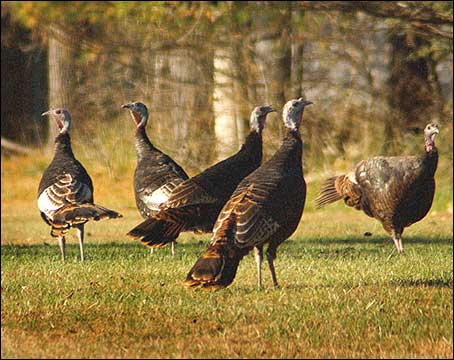
Finally, another critter. Two of these crossed the street in front of us...on Franklin Ave. just a few blocks west of St. Paul!
wild-turkeys.jpg
I hope the turkeys come to live with us.

Tomorrow is my birfday! Hugs and turkeys,
Wendell!

Wednesday, November 21, 2007

Critters in your house/Spiders

Greetings and Happy Thanksgiving!

I hope you all have wonderful plans for the holiday. R and I are having a sleepover at the B homestead tonight! That should be fun, and I'm sure I'll be able to post some adorable photos of our nephew, Baby B! It's great spending time with family, but one of my favorite Thanksgivings was spent with my grad school friends, eating a gourmet spread and hanging out all day.

Currently my entire ass-leg is on fire from the "Straight Up Strength" class I took at the gym yesterday.

It's a big week for Critter News!

Squirrels: The Revolution Begins.

An innocent goat is killed!

Related to today's critter entry; a arachnid larger than a person!

So, what critters are currently in your house? Here's a photo collection from our own apartment building.

DSCN2890.JPG
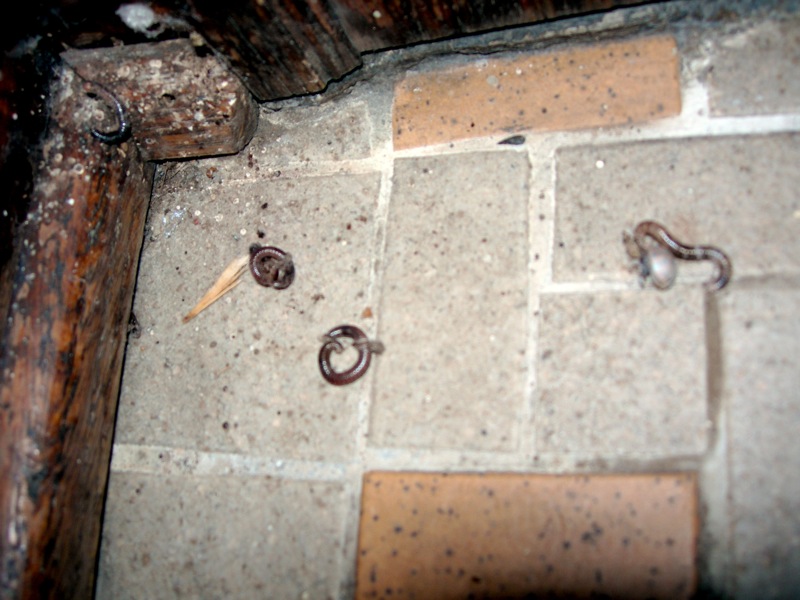
Dead millipedes in the front entryway. I think they've been killed by spiders; but what are the millipedes doing inside anyway? I wonder if they eat tiny plant particles indoors or something.

DSCN2891.JPG
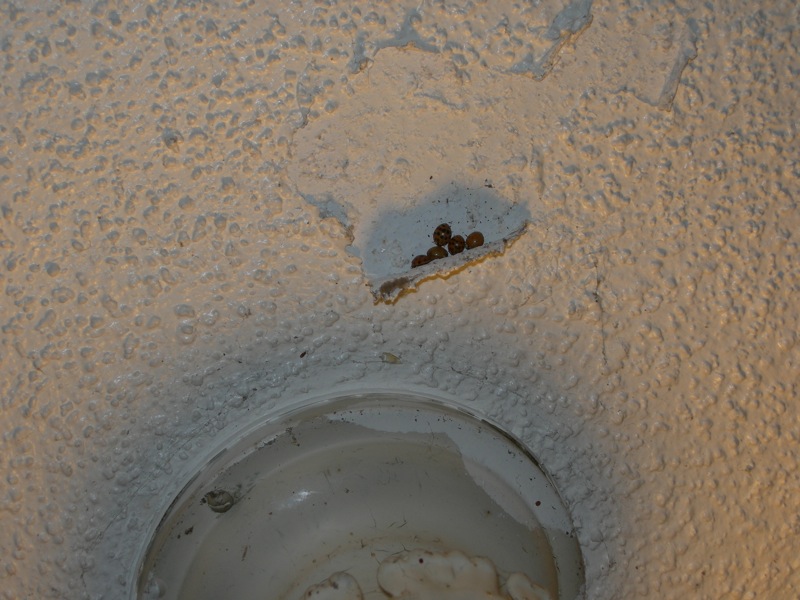
Some Asian beetles, hiding in this paint chip next to the upper landing light fixture. Don't they look cute and cozy?

DSCN2897.JPG
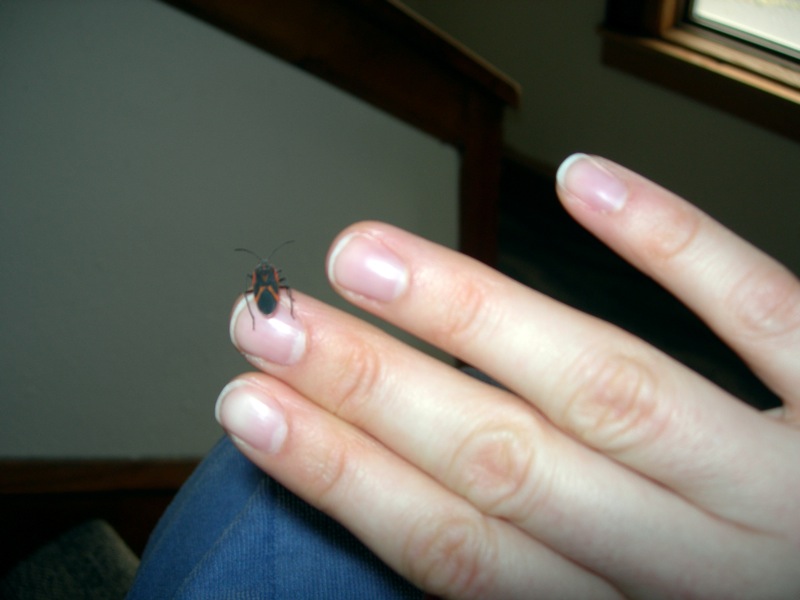
One of the few remaining box elder bugs in our stairwell. I hope he didn't notice this:

DSCN2896.JPG
Eeee! The box elder bug graveyard on the carpet of the landing! (Our apartment does not have a caretaker, can you tell? Also, can you guess who is the only person who has been vacuuming the stairwell? Um, not lately.)

On to the Critter Feature: Spiders. Yesterday, there was a lovely spider in the shower with me; I wish I would have taken a picture because today it has disappeared. Like some of my other entries, arachnids are a huge category and I'll just present an overview today. R and I like spiders, and usually allow them to share our apartment; they might get squished if they are crawling across the comforter or something.

sacspider
This sac spider was my guest in the shower yesterday, I think.

Within the Arachnid Class, spiders are part of the Order Araneae, which include scorpions, mites and ticks. Scientists have placed 40,000 species into 111 families, but think there may be 150,000 more species yet to be identified or discovered!

Spiders are physically different from insects in that they have two segments instead of three. In spiders, the head and thorax are fused together, which results in what is called a cephalothorax. The thin "waist" of most spiders is called a pedicle, and allows it to move freely in all directions. Unlike the faceted compound eyes of insects, spiders have eyes made of a single lens. Most spiders have eight eyes, but some have six, four or two. Depending on the nature of a spider, they will either have very poor or very sharp vision. As you can expect, jumping spiders and net-casting spiders need excellent eyesight to pounce on their prey! Some web-making spiders rely more on the vibration of their web than the visual scanning of potential meals.

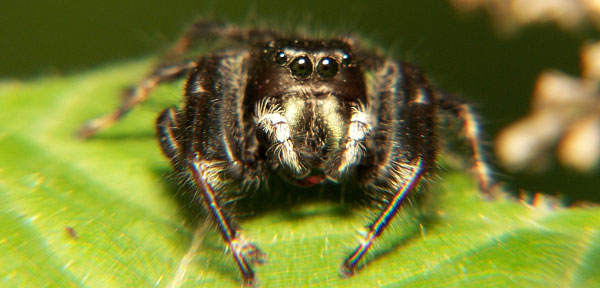
Here is a cute jumping spider, common in the Midwest:
spider_Phidippus_4
I see six eyes, what about you?!

Spiders have varied ways of breathing. Some have what are called book lungs, because of their folded appearance. These folded layers, probably evolved from gills, allow for oxygen absorption. Some have a tracheal system, where openings along the body, called spiracles, allow oxygen (moisture, etc) to enter the arachnid and reach the tissues using tubes called tracheoles. Hemolyph, the blood of arachnids, doesn't carry oxygen, which some scientists think limit the size of the spiders. (Hmmm, check out the news headline above for crazy arachnid size!)

Spider nooky is very interesting! A male spider will build a small platform of web and ejaculate onto it. Then he places special bulbed pedipelps (small legs) into the sperm and sets off to find a female! Again, depending on the eyesight of the species, he might go into a complicated mating ritual (wolf spiders or jumping spiders) to let the female know he is not a candidate for dinner! Some males even offer the females a morsel, like a dead fly for example, to quell her hunger before he approaches! Once the male has safely approached the female, he places his pedipelp inside her epigyne, or female opening. The sperm is then stored until it comes in contact with the eggs. There are many species of spiders that engage in cannibalism after mating, most famously black widow spiders, but sometimes a male black widow will live on the female's net for several days after mating. Scientists think the death of the male after mating is good for the species, as the males don't help raise the babies anyway and at least he can provide a good meal for the pregnant female. After all, she is carrying his DNA.

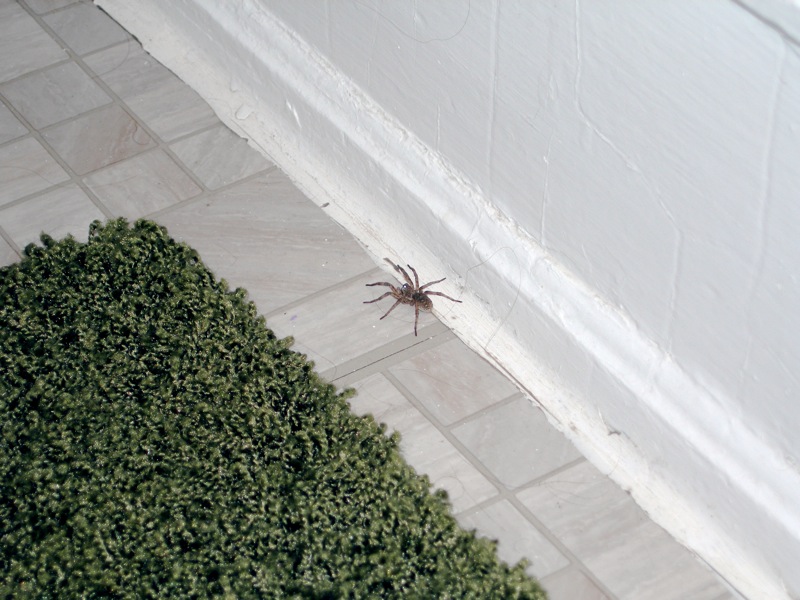
A giant house spider in the W family ancestral bathroom:
DSCN2672.JPG

Spiders have three steps in their life cycle; embryo, larval and nympho-imaginal; during the latter the spider enters into sexual maturity.

All spiders are predators and most bite their prey immediately upon contact. The venom either liquifies the interior of the prey or paralyzes it with a neurotoxin. Spiders mostly can eat only in a liquid form, but some spiders with especially strong chelicerae (fangs) will chew edible parts of an insect. Some spiders can spit their venom! There are about 200 species of spiders that can harm humans, but many more that can cause a painful bite.

The main feature of the spiders abdomen are its spinnerets, which spin the silk. Spider webs take on many forms:
* Funnels
* Trapdoors
* Tangled mazes
* Diving bells
* Burrows
* The standard spiral web

Spiders live all over the world, from the Arctic, to my shower, jungles, caves and the highest mountains. The largest species are from the tarantula family, which can grow 3.5 inches long with a legspan of 10 inches; the tiniest species are only 1 millimeter in size.

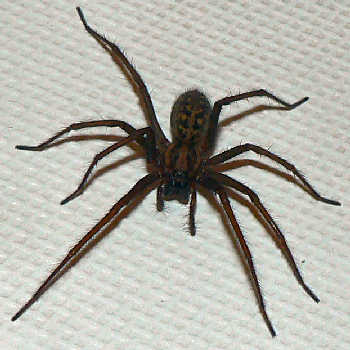
giant-house-spider
A close-up of the giant house spider.

Fun fact: Daddy longlegs, or harvestmen, are part of the Opiliones family of arachnids, and contrary to the popular wive's tale, actually don't have venom. They actually chew their food, and are more omnivorous than other spiders. FYI.

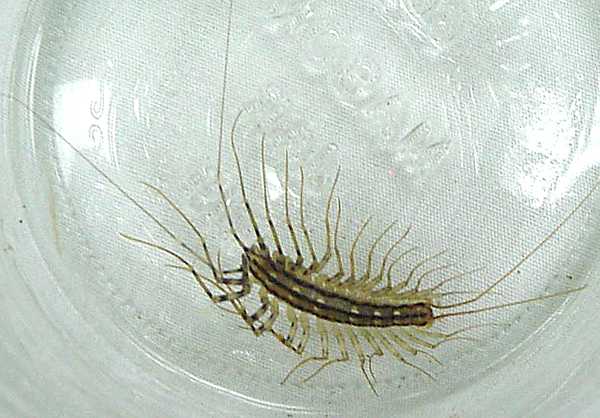
Well, have you learned about spiders? I know some of you are scared of them, and I definitely don't want one to bite me, but they are excellent bug killers. I keep them around my crib in the hopes that they will kill one of these:
centipede
Ahhhhhhhhhhhhhhhhhhhhhhhhhhhhhhhhhhhhhhhhhhhhhhhhhhhhhhhhhhhhhhhhhhhhhhhhh!

Pumpkin pie,
Wendell!