Showing posts with label Rodentia. Show all posts

Sunday, April 12, 2009

The South American Degu!

Howdy all!

I hope April is going smoovely for you. Things are great here! Today I watered my gardens for the first time and discovered tulips and lilies emerging! Since this is the first spring in our house I didn't know what to expect, other than the 80 bulbs I planted in the fall.
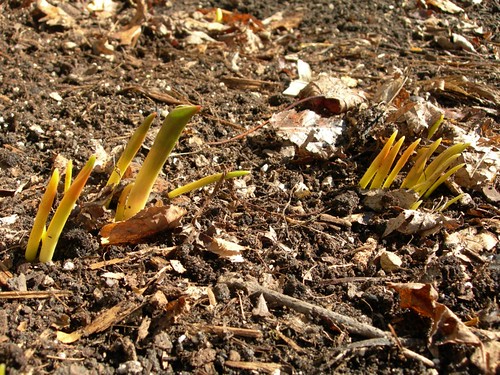
DSCN4637.JPG

DSCN4636.JPG

Last weekend I was so excited to host my cousins Miss Lippy and Big W from Wisconsin - their blog links are visible on the right of my screen. It is always fun to have visitors, and these sisters are awesome in general. Not only did we feast at Brasa and on pizza from Pizza Luce, but also conquered the MOA and IKEA, the latter with Maven herself!

Miss Lippy and Big W shown here after the big shopping day, bonding with Stella:
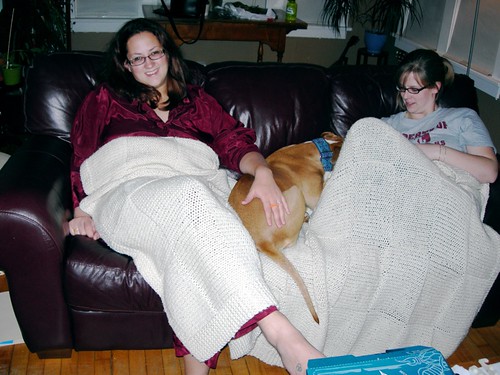
DSCN4614.JPG

Apparently Big W has a former colleague who was really into having pet rodents, including a South American degu. What?!

Have you heard of degus?! Let us learn together.
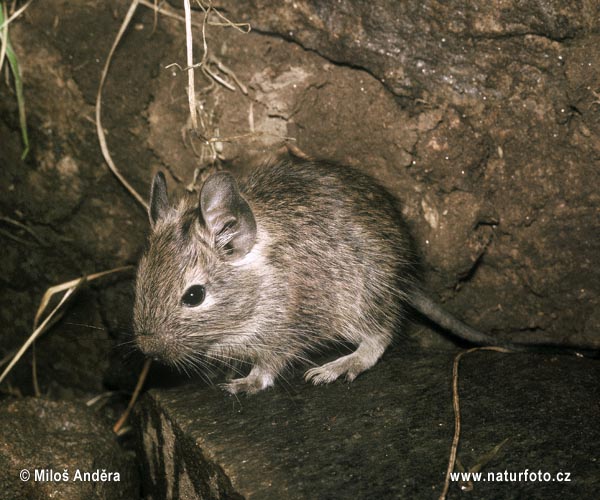
degu-degu.jpg
Fer cute!

Degus, or Octagon degus, is a cousin of the guinea pig, capybara and chinchilla. Tonight I learned the above critters are members of the Caviomorph infraorder of Rodentia. These guys have different skull structures than other rodents, and include some Rodents Of Unusual Size in Africa too. Not to forget our own North American dude, the porcupine!

Side Note: I am totally fascinated by how animals evolved throughout the planet, and the role of plate tectonics in how these rodents moved from Asia to Africa and to South America.

There are four species of degus with populations in Chile and Argentina, including a distinct variety living solely on Mocha Island off the central coast of Chile. (Field trip necessary.)
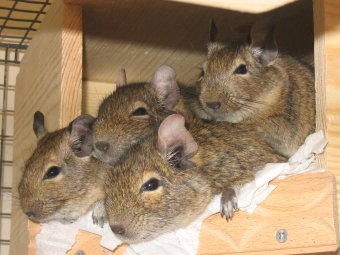
DEGU-FAMILY.JPG

Degus are four to seven inches long and have furry-tipped tails. These social rodents are herbivores and live in complex social groups. Together, they dig extensive tunnels. Along with plants and cacti, degus eat nuts and roots. In rough times they supplement their diet by eating their own poo, (coprophagy) like rabbits.

Side Note: My dog prefers to eat cat poo and other, mystery poop she can quickly snatch off the ground before I stop her.

Degus have a complicated vocabulary of squeaks and grunts with which to communicate, along with urine scent marking. Unlike some other rodents, degus see well, probably because they are active during the day. A degu superpower is the fact they can see on the ultraviolet spectrum, and their white belly fur and urine glows when viewed through an ultraviolet lens!

Some white belly fur:
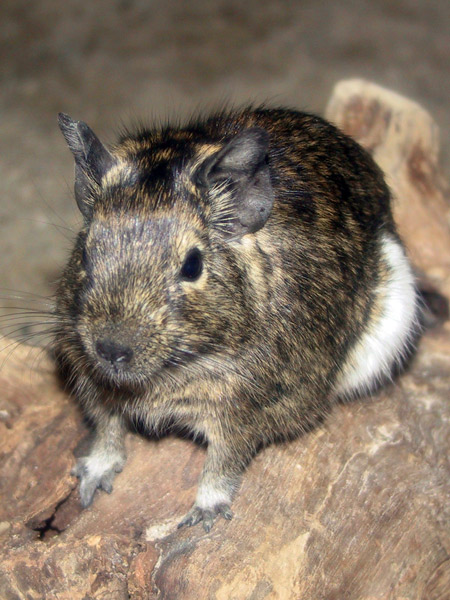
Degu1.jpg

Like most rodents, degus reproduce on the regular. The females even nest together and nurse each other's babies. Unlike other beady-eyed critters, degus have a long gestation period of 90 days. This allows the degu pups to be born with fur, vision and hearing ready to go.
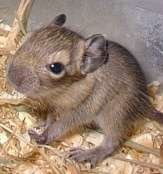
petitdegu1.jpg

Degus are also really intelligent, probably because of their social systems. Scientists have taught them to use tools in captivity. They also become easily diabetic when fed too much fruit, and are used in laboratory research to study the disease.

In fact, it was through the lab that degus first became house pets! They are easily trainable, intelligent and affectionate pets, "grooming" their owners by stroking them with their teeth! It is also convenient that they are active during the day. Because of their burrowing habits, however, a degu can easily chew through the plastic bottom of most guinea pig cages, so more rugged housing is necessary. Degus can live eight to thirteen years in captivity.

OMG I totally want one!

Fuzzy fuzzy degus,
Wendell!

Monday, February 2, 2009

Marmot Day!

Dear Critter Readers,

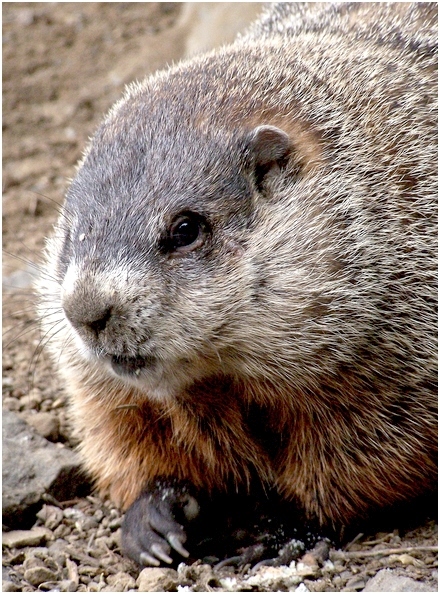
groundhog.jpg

Happy Groundhog's Day! This historic date, February 2nd, marks the fourth anniversary of Wendell's Critter Corner!

It was so cold here this morning I fear I already know Punxatawney Phil's prediction!

xoxoxo
Wendell!

Wednesday, May 7, 2008

Wedding Weekend and Rodent Repost!

Hello everyone! I hope the month of May has been good for you so far! The sunshine was lovely today; I just took a nice bike ride. (Well, except for a smashed shin from trying to get my bike past the screen door and wooden door and up the stairs into our apartment.)

We had a great trip up to sister JHF and JF's wedding at Lake Winnibigoshish! I highly recommend the Bowen Lodge, where we stayed. The cabin was lovely, the lodge was beautiful and the hosts were very nice people.

Ze pictures:
DSCN3486.JPG

DSCN3479.JPG

DSCN3474.JPG Bridal makeup design provided by Wendell!

We had the pleasure of transporting R's grandpa and his wife up north with us. It was great getting to know them better and hearing wonderful stories about their lives!
Here they are in the horse drawn carriage.
DSCN3488.JPG

While beauty was provided by JHF, the bride, cuteness was provided by our nephew, Baby B! Shown here with his beautiful Grandma, RB.
DSCN3489.JPG

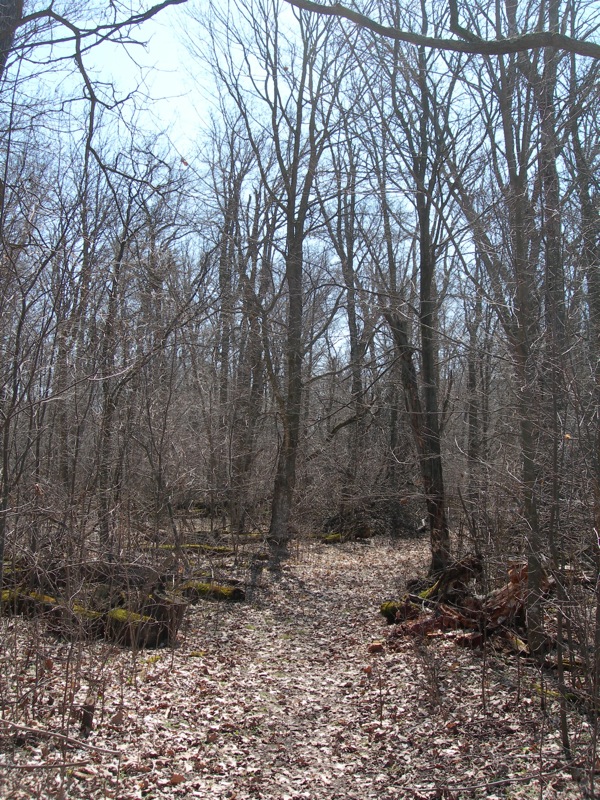
R and I took a nature walk by the lake, which the Mississippi River flows right through.
DSCN3464.JPG
(It was a lot more wintry up there, four hours north of the Cities!)

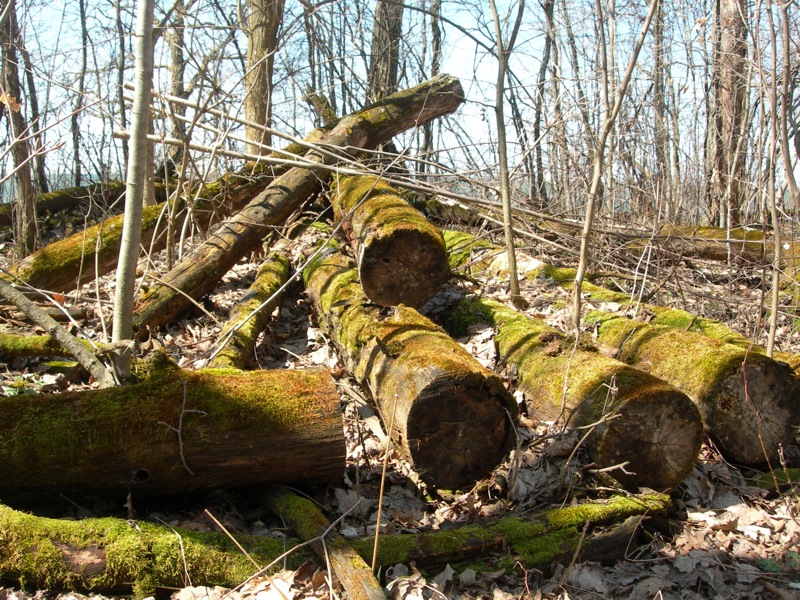
DSCN3443.JPG I luv moss.

DSCN3444.JPG

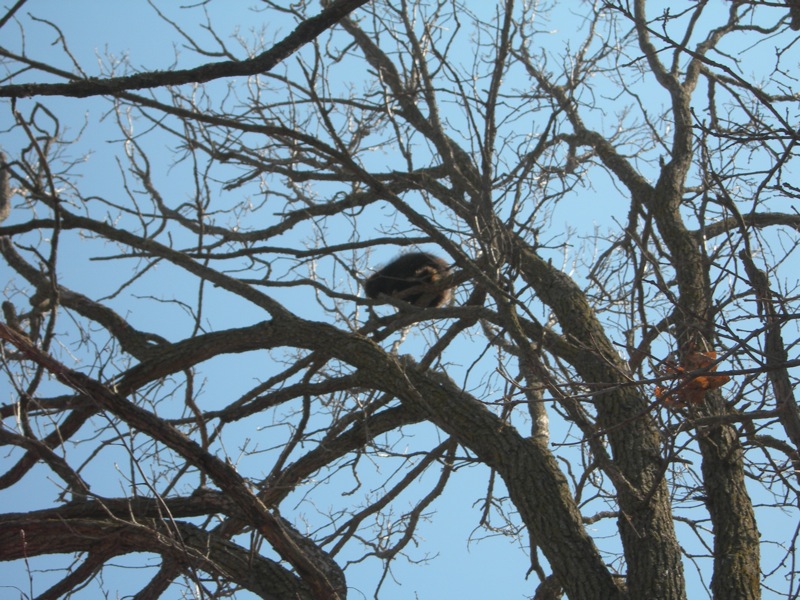
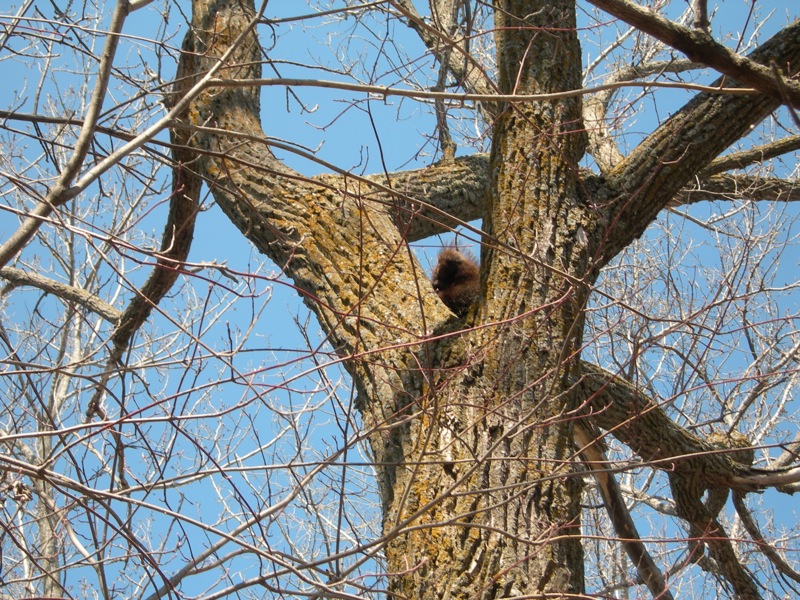
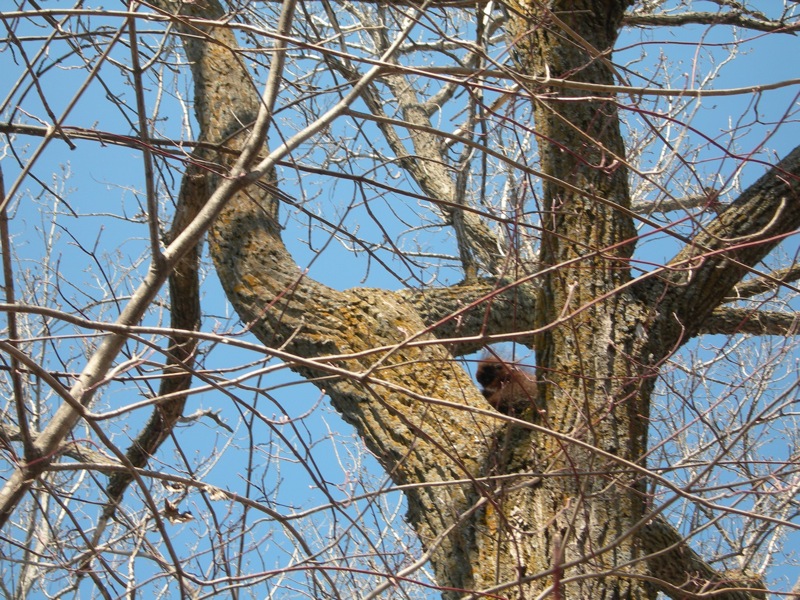
We ran into AB and RB on the trail; they had seen a porcupine run right up a tree! Indeed, we soon came upon the furry rodentkin!
DSCN3448.JPG

It watched us as we paused beneath the tree.
DSCN3447.JPG

As we walked to the end of the point and headed back toward the lodge, we discovered YET ANOTHER porcupine!
DSCN3454.JPG I would like to pet the porcupine, just a little bit on his forehead.

DSCN3455.JPG

To learn about this defensive dude, I'll repost my Critter Corner Entry from 3/27/2007:

This critter was suggested to me by my dear cousin Miss Lippy. The porcupine!

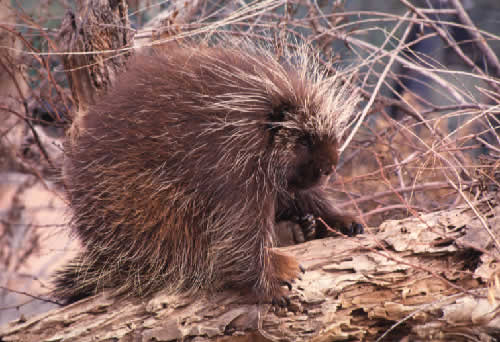
porcpine1

Fuzzy! (But spiny.)

Porcupines are the world's fourth largest rodent, after the capybara (and mara) and the beaver. The average porcupine ranges from 25 to 36 inches long, has and eight to ten inch tail and weighs between 12 and 35 lbs.

In the big ol' Order Rodentia, there are two porcupine families. The eleven Old World species fall into the Hystricidae family, while the twelve species of our own New World porcupines are part of the Erethizontidae family. Interestingly, the two families are not closely related. It seems like the New World porcupines actually evolved quills as a form of defense separately (and later than) the New World dudes. For a large, slow and otherwise wimpy rodent, some badass quills sound like a good development.

The word porcupine comes from the French "porc d'epine" or "thorny pork". They are also called "quill pigs".

Superpowers of the porcupine include, um, its' quills, along with superb hearing, senses of hearing and taste. Eyesight is poor, though. They're also excellent swimmers, kept buoyant by their hollow quills!

Contrary to popular belief, porcupines don't actually throw their 30,000 quills at their enemies; they just come off easily when touched. The body heat of the attacker causes the quill to expand and sink in deeper. Barbs on the quill also deepen the wound if an animal (or person) tries to pull it out. An encounter with a porcupine can kill an animal, not usually from infection, but instead from starvation, as any quills in the mouth might prevent the victim from eating.

The fisher, part of the weasel family, is one of the few creatures that can kill a porcupine. A fisher will incapacitate the porc by biting its' nose, and then flips the spiny guy over and attacks its' furry belly. Porcupines aren't very fast, and can easily be clubbed by people. In Italy, Vietnam and some parts of Alaska porcupine meat is considered a delicacy.

Side note: Has Mario Batali ever cooked porcupine on his Molto Mario show?

Side note: Have YOU ever been stuck by a porcupine?!

Porcupines are strict vegetarians, enjoying leaves, twigs, ground plants and in the wintertime, tree bark. They can kill trees by eating all the way around a trunk. Although porcupines climb trees regularly, and may live in a hollow tree trunk, one Alaskan study found up to 30% of porcupines had healed fractures. This makes one assume that they fall out of the trees, too!

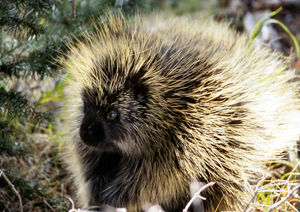
porc2

These rodents are mostly solitary, although they might snuggle together in a winter den. They'll live in caves and hollow logs as well as tree trunks.

Females are more territorial than males, but when nooky season comes along, in the late summer or early fall, males will expand the size of their territory over five times to find a honey. Upon meeting each other, the male porcupine will put on a squeaking and wiggling display, culminating in the process of urinating on the female's head. If she's into it, she'll back up, flip her tail over her quills (the underside of the tail is not spiny) and accept his love. If the female porcupine is not interested, she'll shake off the urine and leave the scene!

The gestation period for porcupines is very long for a rodent: Seven months. Usually one or two babies are born. Their spikes harden within the first hour, and they nurse for about four months. The baby porcupines then find their own territory in the late summer when mating season comes around again.

For cute!
lh_porcupine_baby1

Two more facts: Native Americans decorated leather with porcupine quills. Porcupines will seek out salty items like shovel handles and wooden canoes and then eat them to get the sodium!

I hope you liked learning about porcupines!

Happy Hump Day!

xooxxo
Wendell!

Saturday, February 2, 2008

Marmot Day!

Dear Critter Readers,

groundhog.jpg

Happy Groundhog's Day! This historic date, February 2nd, marks the third anniversary of Wendell's Critter Corner!

(I'll pause to let you get a tissue/commemorative tattoo.)

And what is the forecast from our friend Punxsutawney Phil?

Ugh, six more weeks of winter! But isn't that always the case in this northern region of the United States?

But wait, another marmot has made a prediction down south! Check out this report from Gen. Beauregard Lee PhD, Georgia's "Official Weather Prognosticator"!

The 2007 Marmot Day post!
The 2006 Marmot Day post!
The inaugural 2005 Critter Corner entry!

Love to you all and thanks for your three years of support!
Wendell!

Monday, December 31, 2007

Lemmings

Howdy, Critter lovers!

How are you this December 31st? R and I are unsure of our party status as he is in the midst of a cold, and I am recovering from the same one.

To facilitate healing, yesterday I made a pot roast in our new dutch oven! It was a Christmas present from R.

DSCN3066.JPG

These veggies look beautiful in the pot, I think:

DSCN3068.JPG

We also watched an episode of the show,"Be the Creature", which was previously mentioned on the Critter Corner. The Kratt Brothers were profiling the relationship between Ethiopian wolves (red with upright ears, super cute!) and burrowing rats.

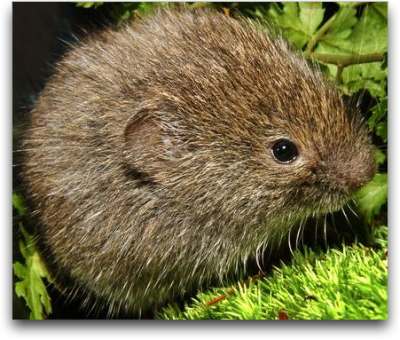
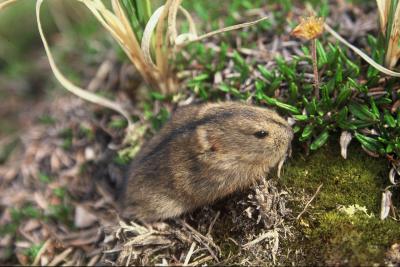
I thought, "What cute rodent have I yet to feature on the Critter Corner?" And it became apparent. One of the rarest rodents in Minnesota is the bog lemming! So here we go.

boglemming1.jpg
So cute!

Lemmings, along with muskrats and voles are part of the subfamily Arvicolinae, which in turn is a member of the superfamily Muroidea, which with its members rats, gerbils, hamsters and mice is the largest mammalian family on Earth.

These fuzzy rodents weigh around one to four ounces and are three to six inches long from snout to tail. Lemming ears and tails are smaller than most other rodents, possibly due to their northerly range.

There are populations of lemmings throughout the northern hemisphere, and they are famous for their rapidly fluctuating populations. Norway especially is home to lemmings that will cycle between numbers in the thousands to near extinction. Scientists are unsure why. Another possible misconception is that the number of lemmings predict the number of predators, wolves for example. But now researchers think the opposite might be true.

lemming.jpg

Lemmings do jump off of cliffs, but this action is not a mass suicide. Rather, the lemmings migrate in huge groups once a region become overpopulated. These travels sometime require swimming, so lemmings may jump off a ledge in order to get into the water to swim to another location. This may lead to some fatalities, of course.

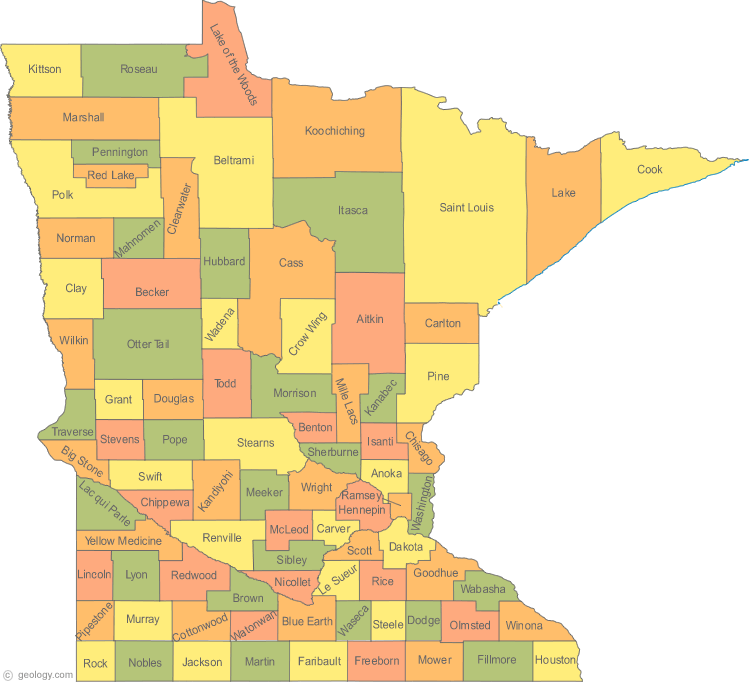
In Minnesota there is a small population of bog lemmings. These live in the far northern reaches of the state, including habitats in Itasca, Lake of the Woods, Roseau and Koochiching counties.

minnesota-county-map.gif

Apparently there are two types of bog lemmings in Minnesota, the northern and southern species. One of my sources says the southern bog lemming has six nipples compared to the eight mammary glands of the northern bog lemming. But the MN DNR site says the species cannot be identified with the naked eye.

Bog lemmings moved north as the most recent glaciers retreated, about 10,000 years ago. The former lemming populations in Kansas and Nebraska are now extinct, but populations exist from Washington state east to Maine.

Like other rodents, lemmings eat plants and roots, ingesting tough material to wear down their continually growing teeth. The northern bog lemming also eats slugs and snails, and prefers an environment that is open and wet. Considered an animal of special concern in Minnesota due to loss of wetlands, one place to spot a lemming is at the Big Bog Wildlife Preserve.

Side Note: R, I really want to go to this giant bog! Let's camp up there!

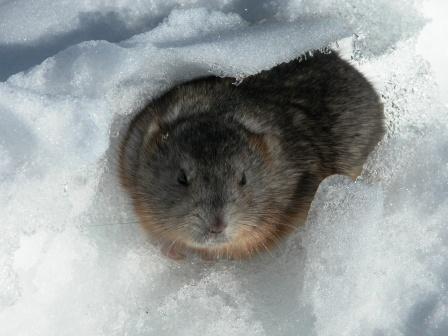
Lemmings follow animal trails to find food, and make their own, tunneling through undergrowth or making snow tunnels like voles. They are active day and night.

lemming3.JPG
Mur!

These rodents have two to three litters of babies per year. Four to six tiny lemmings are born each time, and the Mama can become pregnant again the day after she gives birth. After five to six weeks, the babies are sexually mature too. It seems lemmings live in colonies, and often don't survive for more than a year.

lemming2.jpg
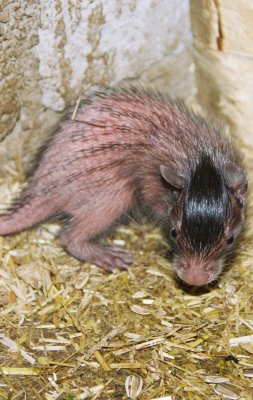
A babykin lemming.

Fun fact: The collared lemming is the only rodent to completely turn white in the winter. They are residents of Canada and Alaska.

Have any of you ever seen a lemming?! Any critter sightings today? I hope you all celebrate safely tonight!

xoxoxo
I love lemmings,
Wendell!