Showing posts with label Artiodactyla. Show all posts

Wednesday, June 17, 2009

June Adventures

Greetings, all!

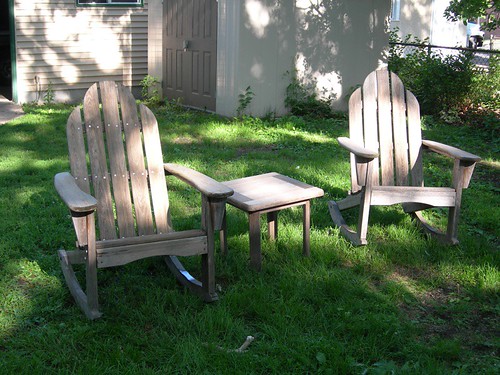
Man, for being recently unemployed for over a month, I sure have not posted a whole lot! Probably because I've been eating every meal outdoors and trying to relax, read, exercise and have fun with my Bobo-Dog. A summation of these activities is represented by this photograph:
DSCN5041.JPG

Check out this adirondack chair and table set our across the alley neighbor GAVE US!
DSCN5073.JPG
(I baked the neighbor a strawberry rhubarb pie to thank her.)

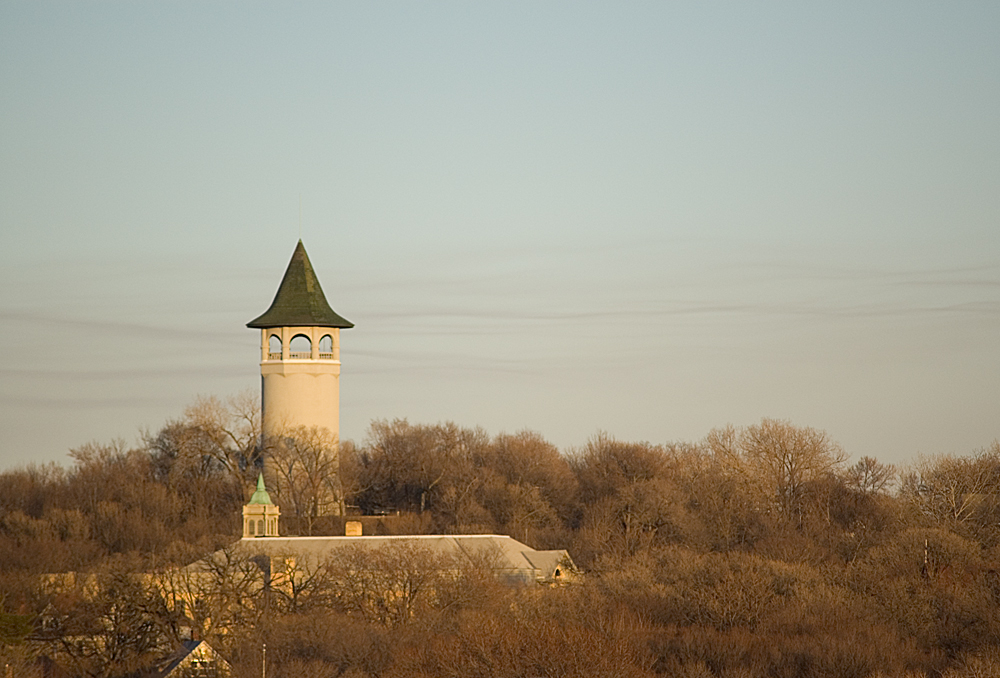
We finally went inside the Prospect Park Water Tower, after living in that neighborhood for over four years. The tower is open once yearly.
Prospect_park_witchs_hat_fall

DSCN5057.JPG

DSCN5066.JPG

GH came to visit:
DSCN5031.JPG

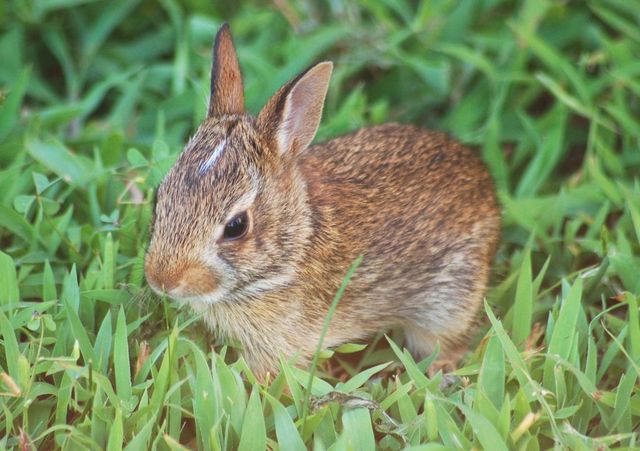
On the same night that R and I went to Fogo de Chao we saw our first baby bunnies of the year. Yes, two babies! They were right outside my teaching office, where we'd parked.
baby_bunny

I'm glad to have tried Fogo de Chao, but honestly, only one of the meats was really delicious to me. It's an expensive place and I'm happy R's colleague was nice enough to treat us.

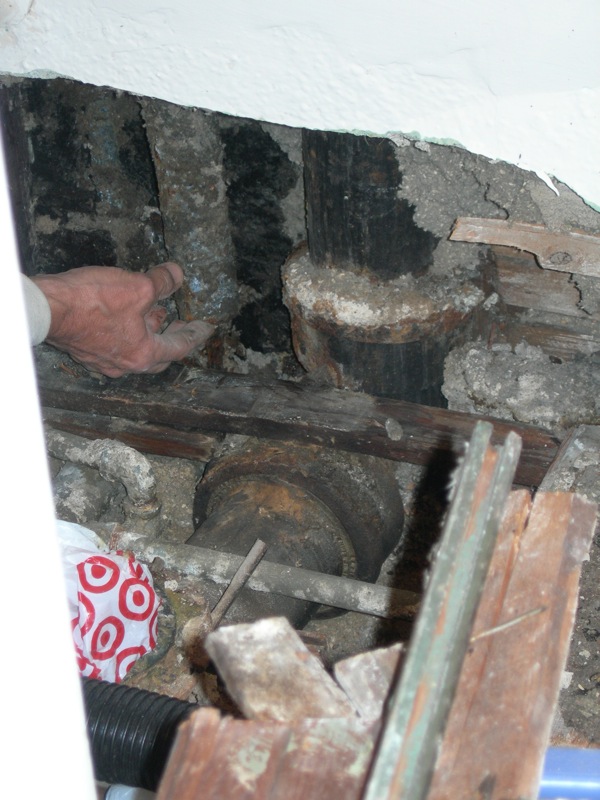
In non-meat news, R and his Dad destroyed our upstairs bathroom because water was leaking into the basement:
DSCN5101.JPG
Goodbye, horrifying bathroom carpet!

The poop pipe to nowhere, which overflowed from the sink drain at this point behind the toilet:
DSCN5107.JPG
Cooties.

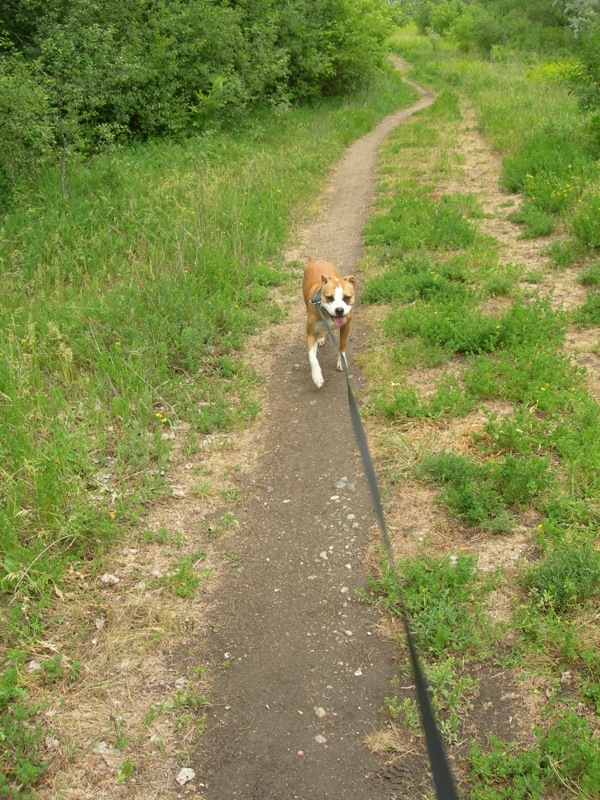
Last week Stella and I went on a solo mission to the Minnesota River Valley Wildlife Preserve:
DSCN5122.JPG

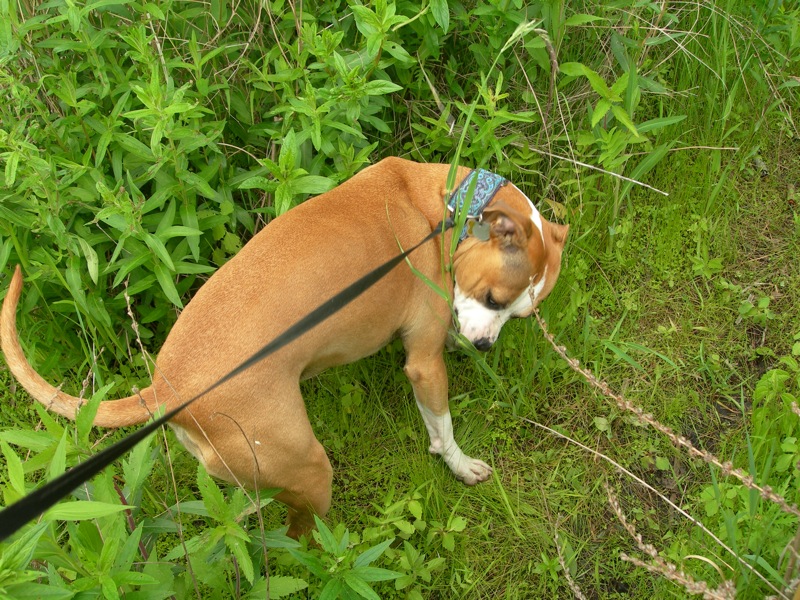
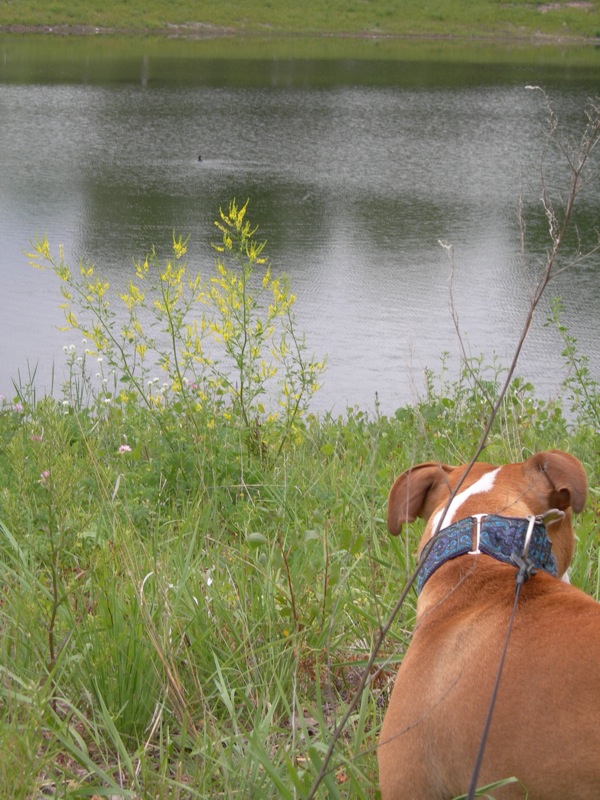
In the summer, Bobo toys with vegetarianism, sampling grass several times a day:
DSCN5119.JPG

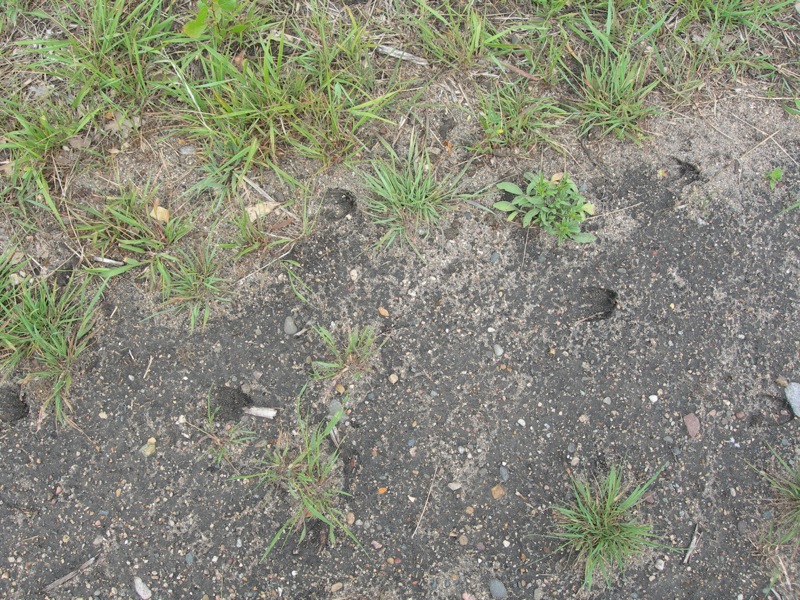
Deer tracks:
DSCN5131.JPG

DSCN5129.JPG

DSCN5142.JPG
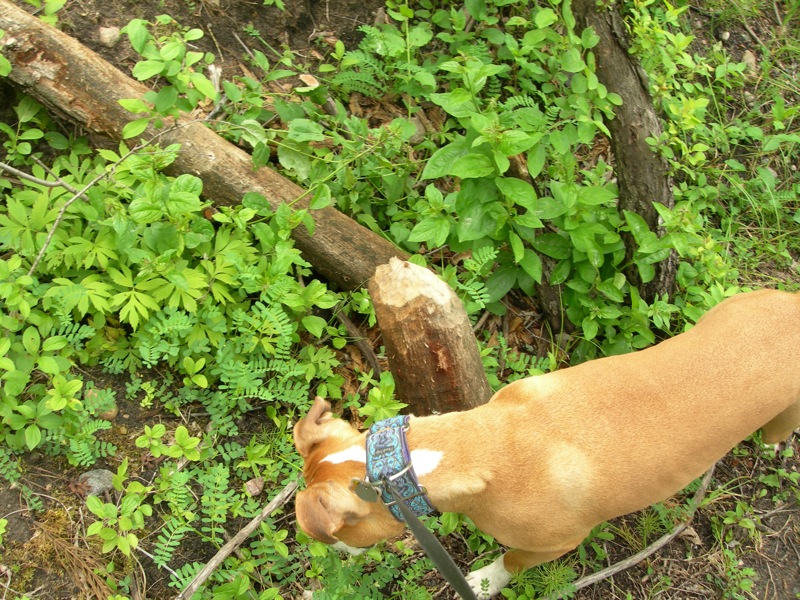
It is hard to take good pictures when your dog is really excited and you're holding the leash!

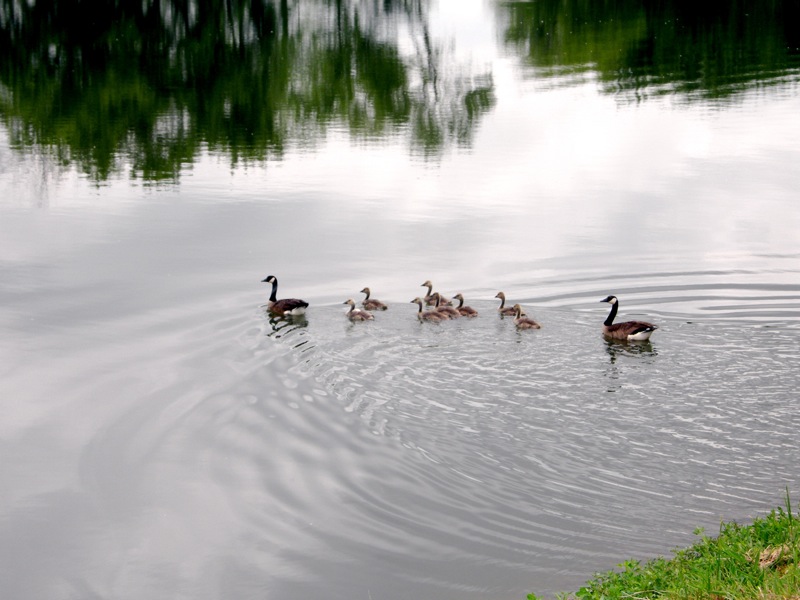
The first goose babies I've seen:
DSCN5148.JPG

There were many great egrets at the preserve:
DSCN5130.JPG

Stella and what I believe is a loon in the background:
DSCN5155.JPG

Now I've returned to the working world, as a waitress! After an eight year hiatus, I think I'm getting the hang of modern serving, that is, with computerized ordering and credit card machines. Come visit me at the new Brasa on Grand Avenue in St. Paul!

Critterlove,
Wendell!

Sunday, January 25, 2009

Critters and Kids: Part Two

Howdy y'all! I hope you all had a great weekend!

Wildlife news:

The Fish Empathy quilt. As an omnivore I'm not really against fish consumption. Especially when I see the cannibalism that sometimes occurs in my own aquarium! But resource management must be used in the fishing industry; some areas/species are becoming dangerously overfished.

More fishy news; a rock climbing catfish?!

Life on Mars?

Today's Critters and Kids feature is dedicated to Baby C! As you can see, Baby C happens to be adorable:
DSCN4324.JPG


Approaching eight months of age, Baby C is an active baby. Her hobbies include napping with Mom, being flown around like an airplane with Dad, sitting up, considering crawling, sweet potatoes and her pet giraffe, Sophie:
DSCN4320.JPG

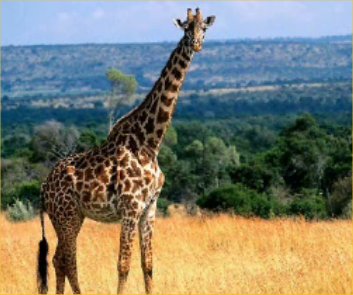
I think Baby C's pet is an excellent excuse for us to feature this amazing African mammal, the giraffe!

Giraffes-dont-exist.jpg

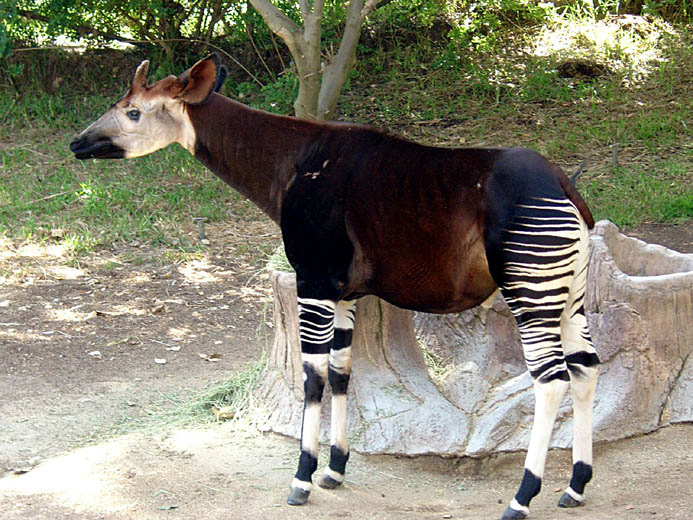
Giraffa camelopardalis was given its Latin name from the old belief that it was a cross between a camel and a leopard. Now we know that giraffes are even toed ungulates, like many deer and antelope, although they share their family with only one other relative, the okapi:
okapi.jpg

In addition to being the world's tallest mammal, giraffes are the world's biggest ruminants, or cud-chewers. Like cows, giraffes have four stomach organs to help them digest the tough leaves and twigs they have for dinner.

Giraffes can grow up to 18 feet tall and weigh between 2500 and 4000 lbs. Females are smaller than males and there are nine varieties of giraffes spread throughout south central Africa.

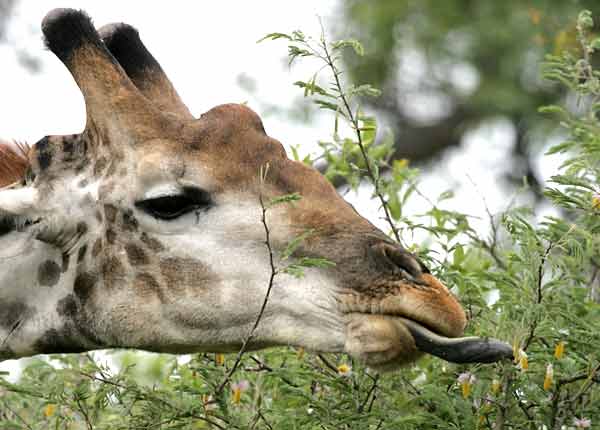
Acacia trees are a favorite of these tall guys, and the giraffe's nimble tongue pulls the small leaves off the branches - up to 140 lbs of leaves a day! Giraffes have tough molars to grind the thorns of these trees. Okapis possess an even longer tongue than giraffes, being the only mammal that can clean the inside and outside of its ears with its big blue tongue! Evidence of the giraffe's wet-willy potential:
giraffe_knp-1364g.jpg

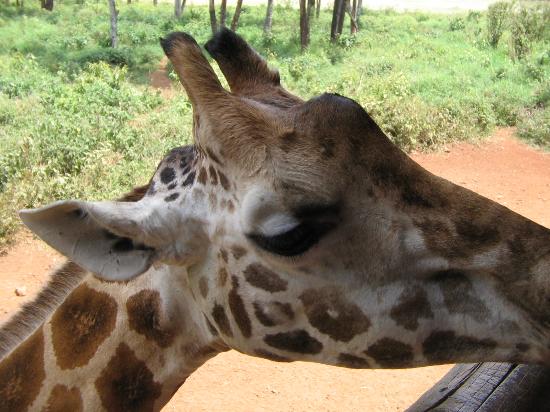
Even though giraffes only have seven vertebrae, just like us, they have other unique features. Giraffe (and okapi) "horns" are called ossicones. Unlike antlers, which are made of bone, ossicones are formed from cartilage. One way to tell the gender of a giraffe is to look at the skin and hair covered ossicones. Males "horns" (above in the tongue picture) are often bald, with the hair tufts worn off from fighting with other boys. Girls ossicones are hair covered:
giraffes-come-very-close.jpg

In order to keep blood pumping through its giant body and all the way up to its brain, giraffes have very high blood pressure. An adult has a heart that is nearly two feet long and that weighs 22 lbs! The legs of the giraffe have very thick, tight skin to prevent this high-pressure blood from leaking out of their capillaries. A network of blood vessels called a rete mirabile (miraculous web) prevents too much blood collection in the giraffe's brain when he bends down to drink. This same type of venous web helps prevent waterfowl and penguin legs/feet/beaks from freezing in cold water.

Giraffes form loose herds arranged by gender; usually females and female calves stay together, with young males grouping separately. Older males may roam alone. Giraffes are not territorial and are often preferred company for wildebeest, other antelope and zebras, who rely on the taller mammal to spot danger far away.

In the mating season, male giraffes often fight each other by "necking", which is the act of swinging their heads and necks around to hit each other. These attacks can occasionally be fatal.

"Ew, gross!" Fact: Male giraffes taste the females urine to determine if she is in estrus!

Like some other animals (bonobo chimpanzees, seals, deer), male giraffes mount other males quite frequently.

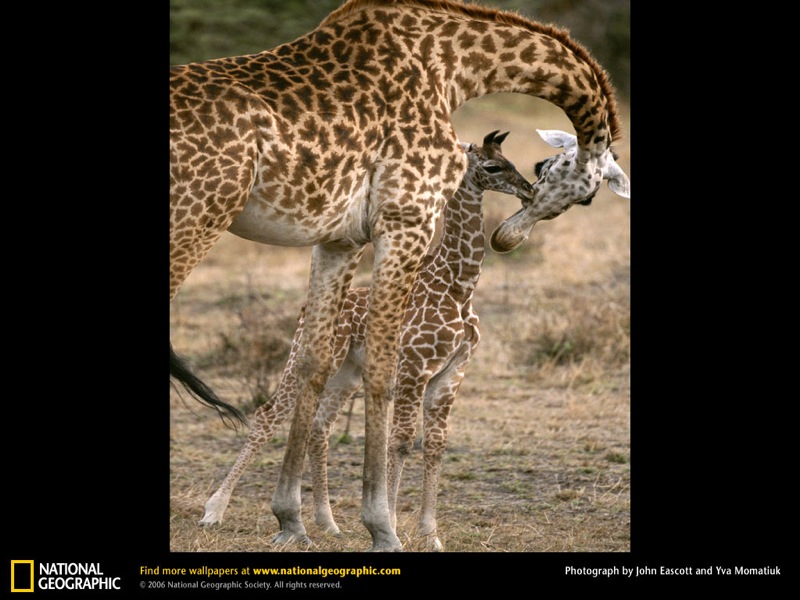
After a male/female pairing, a giraffe calf is born after 14 or 15 months gestation. The momma giraffe gives birth walking or standing up, and often the umbilical sac bursts upon the calf hitting the ground, two meters down! Baby giraffes start walking and nursing at 15 minutes of age.

giraffe-baby.jpg

While adult giraffes are safe from most predators except lions, unfortunately it is baby giraffes that are the most vulnerable to predation. Hyenas, panthers and alligators often take giraffe calves. Only 25 to 50% of giraffes make it past their first year.

Thankfully, many of the varieties of giraffes are protected in Africa's giant nature preserves. Their height helps them survive when domesticated animals enter their territory, as they can reach the tops of trees for food. Like many animals, giraffes are threatened by poaching and loss of habitat.

But I think Baby C's giraffe Sophie will remain quite safe!

Hugs n snuggles to Baby C...and everyone else too!
Wendell!

Friday, November 21, 2008

In brief.

Hello, everyone!

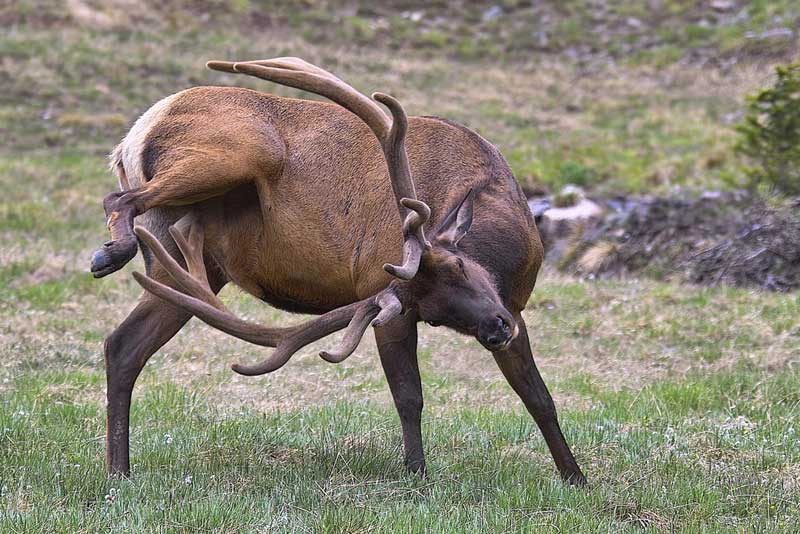
As I prepare to drive to The Motherland, I present this picture, sent in an email from my friend PV:

elk.jpg
Quite a delicate maneuver!

Have a great weekend!
Wendell!

Sunday, March 23, 2008

Critters of Colorado

Hello everyone, Happy Easter!

Did you get snow this weekend? It's been a weird return to winter pigging out and staying in all weekend, compared to the bike riding and long runs that R and I spent time doing LAST weekend.

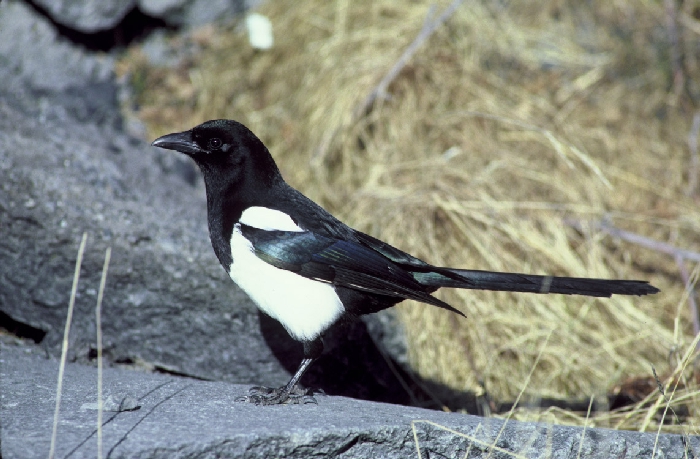
So, as our trip to Colorado is nearly a month gone, I will reflect one last time about some of the non-Minnesotan critters we saw there. In Golden we spotted a strange black and white bird. Upon doing some research with K and JH, we figured out it was a Black Billed Magpie!
magpie2.jpg

These Corvids, or members of the crow family, live from Alaska down to Oklahoma. They're about 18 inches long, with their long tails accounting for about half that length.

Pica hudsonia pairs live together year-round, and March through July is breeding season. While the female bird only incubates her four to eight eggs for 16 to 18 days, the magpies spend up to 50 days building their nest! Measuring 48 to 90 inches across, magpie nests are hooded and feature several side entrances. Hawks and owls sometimes steal magpie nests for their own use!

magpie_bufl.jpg

Magpies enjoy eating a variety of foods, including carrion, bugs, fruit, nuts and seeds. They have a reputation from stealing baby birds from nests, as well as snatching food from other birds. Magpies also will alight on big animals like moose and deer to pick wood ticks from their coats. The black billed magpies will often hoard the live ticks in a hiding place, which backfires as the bugs are still alive and escape from the hiding spot!

magpie.jpg

I hope you've learned a little about these lovely birds! Apparently their winter territory includes Western Minnesota, so maybe we'll see some soon after all.

On our mountain drive to Salida, several mule deer ambled across the road in front of our car! They seemed quite nonchalant about the danger. The funniest sighting was when JB and JF were driving us to the hot springs; about 20 deer were surrounding a church and eating the shrubbery! Unfortunately we didn't have our camera.

Here is my deer entry from my old site, circa 11/16/2005:

This weekend my sister A and I were chatting about deer. Sis A said, "Wendell, just write that the deer are running crazy all over the place." (She hit one last month). Her sweetie TG [now husband] was there and he mentioned a friend of his had been in Texas hunting something called "Axis deer". You know my interest was piqued!

So, back to deer. Scientists believe that deer moved down from the Arctic Circle about four million years ago, populating the warmer southern regions of Europe, Asia and North America. These animals are members of the Order Artiodactyla, or "even-toed ungulates", (even though some peccaries have three toes?) This order includes the aforementioned peccaries, piggies, cows, antelope and deer.

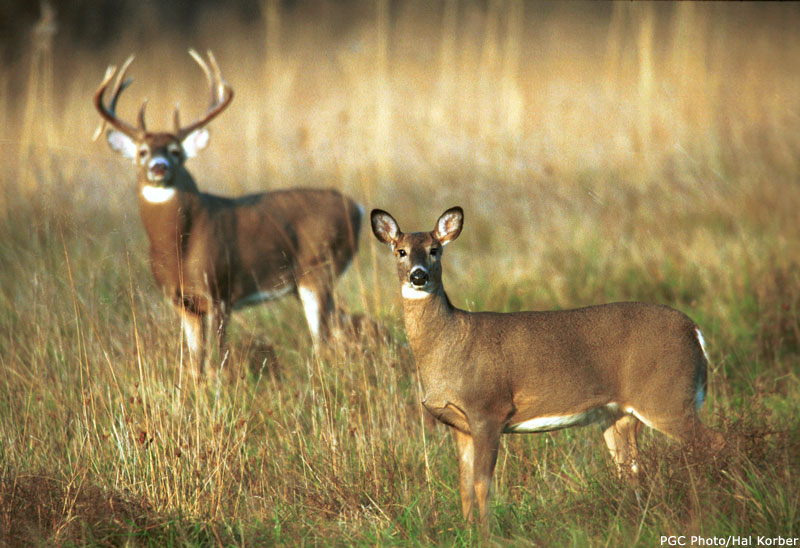
The most widespread species in the US is the whitetail deer, Odocoileus virginianus. There are 30 subspecies and eight different varieties of deer in the Americas.

white_tailed_deer.jpg
I'm sure you've seen the whitetail deer, hopefully not running in front of your vehicle! They are tan to reddish or grayish tan, with white undersides. And of course, the white tail, which becomes visible when a startled deer lifts it, or while running away from an enemy.

Most often you will see deer at dusk or before sunrise. During the day they usually bed down and rest, and then awaken to feed through the night. They will also lie down to rest and chew cud in the night.

Whitetails are known to eat up to 500 varieties of plants in the US. Depending on their habitats, deer will either graze on grasses or forage for leaves and bark; usually a combination of both. In food-rich habitats, deer won't travel far, but obviously will have a larger home range if nourishment is scarce. It requires seven deer to eat as much as one cow.

Whitetails have antlers, which act as protection, a way to mark their territory, and as a fighting tool for the rut! Apparently antler production is related to TESTICULAR ACTIVITY! (Yes!) In the spring, male deer aren't sexually active, and antlers form. As the sexual glands grow during the summer, the antlers harden and lose their velvet. After the bucks mate, the antlers fall off. (My parents then try to find these "sheds".)

Contrary to popular belief, the amount of points on a deer's antlers does not show the age of the animal. Instead, antler size is mostly determined by how much food the deer eats through the spring and summer. (Although older deer will have thicker antler bases.) The best way to determine the age of the deer is by examining their teeth. Apparently antler size is affected by geography (and I wonder if that's related to nutrition too?)

Also whitetail antler size is usually larger if my Dad and his hunting buddies (which includes the S family, my uncles and cousins, and two of my sisters) are shooting them! We have five 10-pointers in our living room at home. At Christmas my Dad likes to hang jewelry for my Mom from the deer antlers! This has included diamond earrings, necklaces, and even her wedding ring after he'd replaced the long lost diamond!

white_tail_deer_fawn.jpg
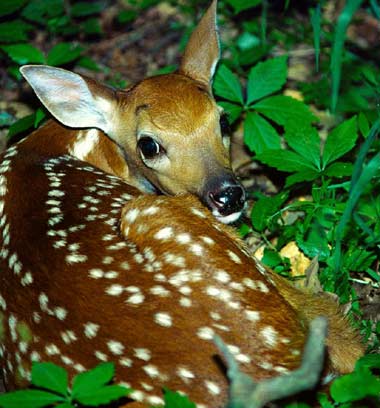
Ok, back to the nooky! The rut takes place from Sept. to early Dec., depending on the climate of the region. The bucks necks swell, and they start fighting to win the doe's attention. The gestation period for deer is seven months, and the doe will hide the newborn fawn for ten days to two weeks, returning throughout the day to nurse it. The spots on the fawn are designed to help it remain invisible in the dappled sunlight of forest underbrush. Eventually the fawn will start walking more strongly and follow her around. Occasionally deer will mate in their first year of life, if food is abundant, but most often lovemaking occurs at the two year mark.

Mule Deer.jpg
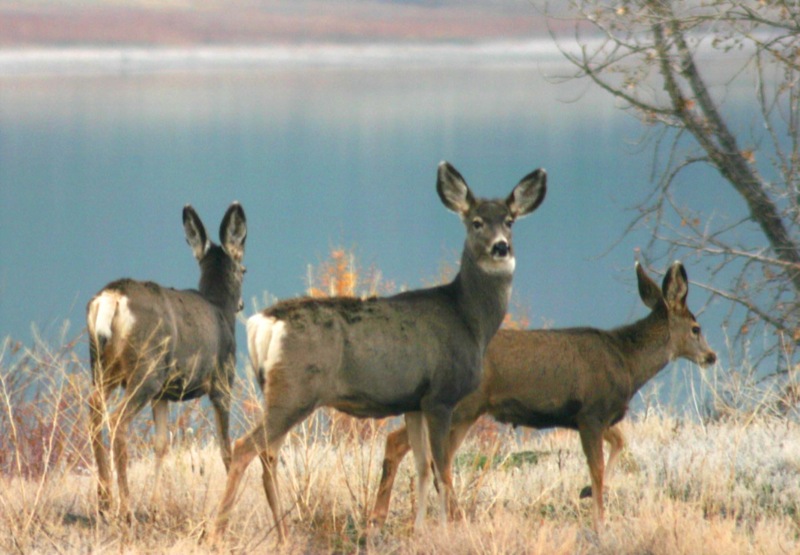
Mule deer (Ococoileus hemionus) are also found in the United States. It seems they prefer more southern and western climates. These large-eared deer sort of hop along, and leave four footprints at once! Mulies and whitetails can interbreed, and these hybrids most resemble whitetails. A variety of mule deer is the blacktailed deer. Here is a male muley; note the black tipped ears.
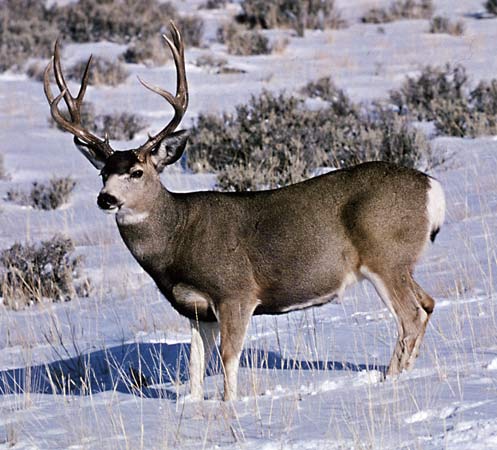
muley.jpg

Now on to T's Axis deer. It's true! In 1932 axis deer (Cerus axix) were imported from India to Texas! In their native land they are referred to as chital. These large deer are spotted even in adulthood, have three spikes on their antlers (with one being much longer than the other two) and have a dark stripe running down their spotted backs!
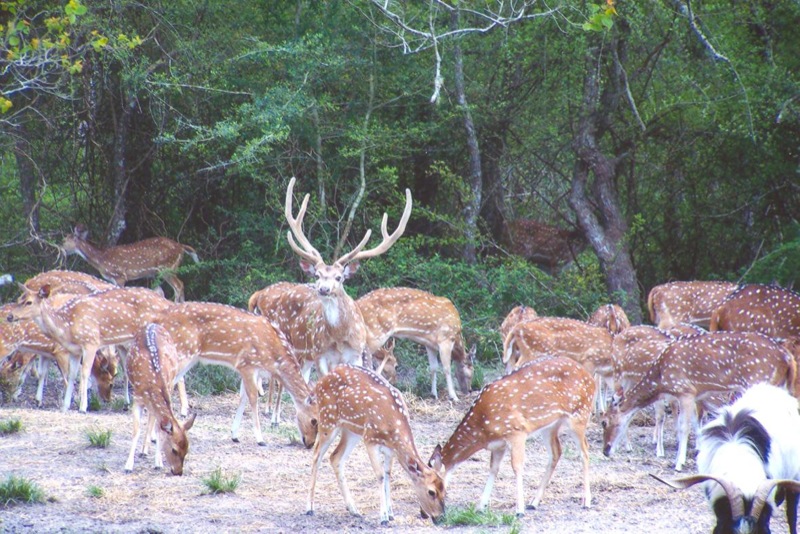

axisdeer.jpg
As you can see, axis deer resemble elk, and like that species, bugle during mating displays. Unlike mule deer and whitetails, axis deer mate throughout the year, and males shed their antlers accordingly. Even so, most babies are born between January and April.


So there is your refresher course on deer! R and I did spot some antelope on our drive back, but, I don't want to make your brain explode with too much information!

Hope your weeks start off smoovly!

xoxo
Wendell!

Sunday, November 18, 2007

The Warthog!

Greetings and welcome to my new website! Obviously I will be making some changes to the template, etc., so thanks in advance for your patience.

Yesterday I competed in the Metropolitan Opera Regional Council Auditions. I think I met my goal of feeling good about the performance; I was so proud as I left the stage! The judges had positive things to say as well. Friends AA and BB were among the prize winners.

Critter News:
Bad Monkey!

Save the Turtles!

Mice and roaches love expensive restaurants!

When I was in elementary school, I was a geek. But there was another girl, perhaps even MORE of a nerd, who called me a name that has scarred me to this day. She called me a "warthog". This was a source of humor for my whole family. So today, let us learn about this creature, and together, decide if I resemble a warthog!

Part of Order Artiodactyla, or even-toed ungulates (along with deer, camels, etc.) warthogs are part of Family Suidae, which includes pigs and hippos. These sub-Saharan pigs are the sole members of the Genus Phacochoerus, although some scientists group them in two species, P. africanus and P. aethiopicus.

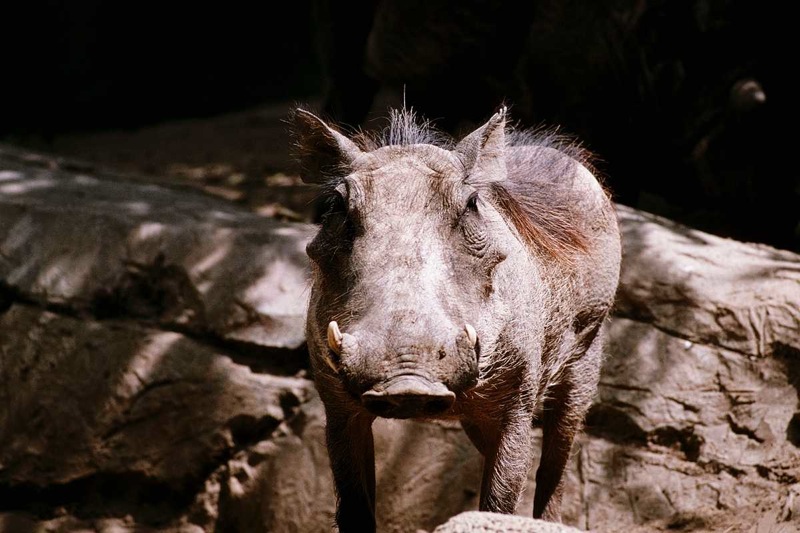
warthog-rock.jpg
Fer cute!

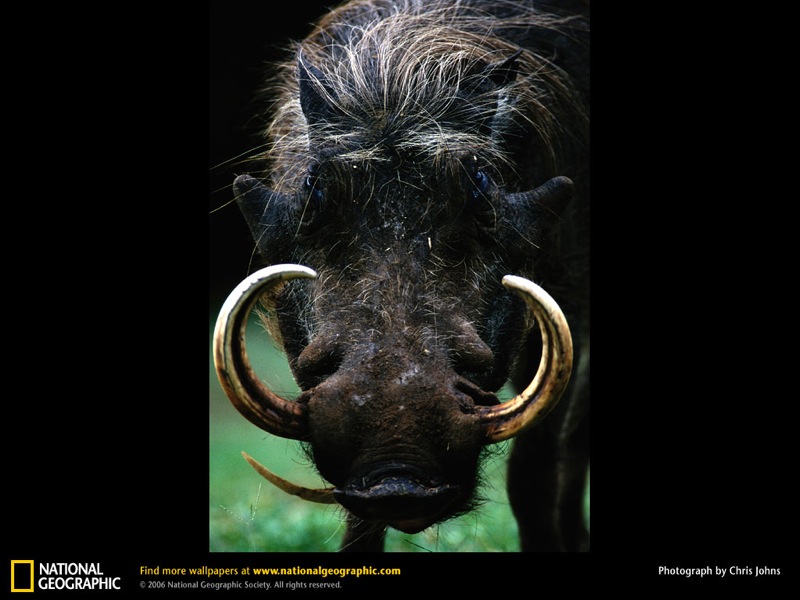
Can you see the four "warts", or protuberances on the warthogs head? These animals range from three to five feet long, 30 inches high and weigh 100 to 330 pounds. The following National Geographic photo clearly shows the two sets of tusks. See how the top tusks curve upward in a half circle? Apparently the lower tusks, which are straight, are the more dangerous of the two sets, as they are polished into razor-sharpness by the upper set. Warthogs use their teeth to dig, as well as protection from predators and to fight each other during mating time.

warthog-portrait.jpg

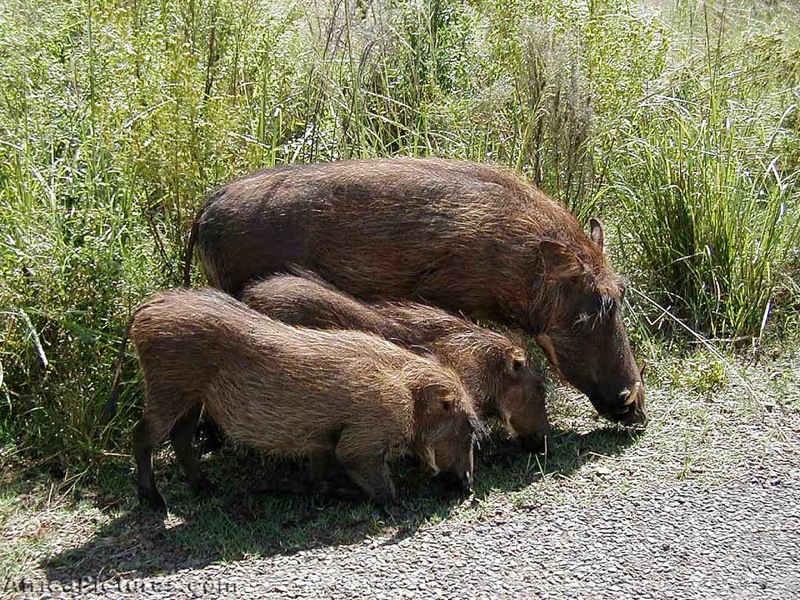
A group of warthogs is called a sounder! Usually a sounder consists of several sows and their piglets, totaling three to 10 animals. The sounders usually have a range of about 150 to 950 acres, consisting of open areas as well as forested ones. Active in the mornings and evenings, the pigs might travel four miles per day in search of food.

Warthogs enjoy every kind of food, from grasses that they kneel to eat, to carrion, to roots, tubers and rhizomes, fungi, berries and even small animals. While their vision is poor, warthogs use their sense of smell to find food and keen hearing to sense predators.

Enemies of the warthog include humans, lions, leopards, hyenas, crocodiles and cheetahs.

While warthogs will fight to protect themselves, more often than not they will run and hide, as they can't run as fast or as far as other prey animals, such as antelope. Even so, a warthog can run over 30 miles per hour! Warthogs utilize hideyholes, which they dig themselves, or more often steal from aardvarks. The pigs back themselves into the holes, so they can burst outwards with tusks bared for attack!

warthog-61024x768.jpg

Warthog nooky takes place at the end of the rainy season (spring). Male sounders will join the groups of females as they're coming into heat. The animals are promiscuous and fights break out amongst the males as they compete for fertile ladies. About 165 days later, at the beginning of the next rainy season, the piglets are born. The momma warthog will kick out her former litter, and line her burrow with grass to keep the babies warm. Usually two to eight piglets are born, but warthogs only have four teats. Each baby clings to the same teat each time he nurses, even if one of the nipples is being unused. Other nursing mothers will accept orphaned babies, however, especially if the mothers are related. The piglets nurse for four months, but get most of their nutrition from grazing by two months.

Like other animals that must survive hot climates, warthogs have adjusted to withstand a higher body temperature. They are the only pigs that can survive without water for several months! Because they are lean and have only bristly hair, warthogs conserve heat and stay cool inside of their burrows.

Aren't warthogs cute!? I like them, and feel less sad about being labeled as one during elementary school than I used to!

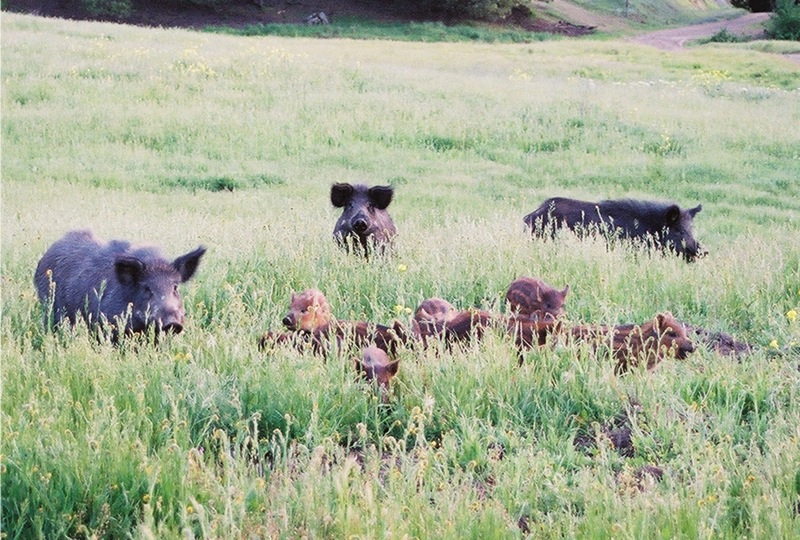
A few months ago R and I watched a really cool show about pigs gone wild, here in our very own USA! The thing about domesticated pigs is that they are the same as wild pigs, and quickly grow hair and tusks upon escaping into the wild. The range of these big wild pigs is rapidly growing northward. See, these North Dakota pigs don't look too different from their African warthog cousins!

Pigsgroupclose.jpg
Except the piglets have those adorable spots and stripes OMG cuteness!

Have a good week!
Warthog Wendell